Barbell back squat
The squat that takes the most weight, and the centerpiece of most strength programs.
The movement
2 stages
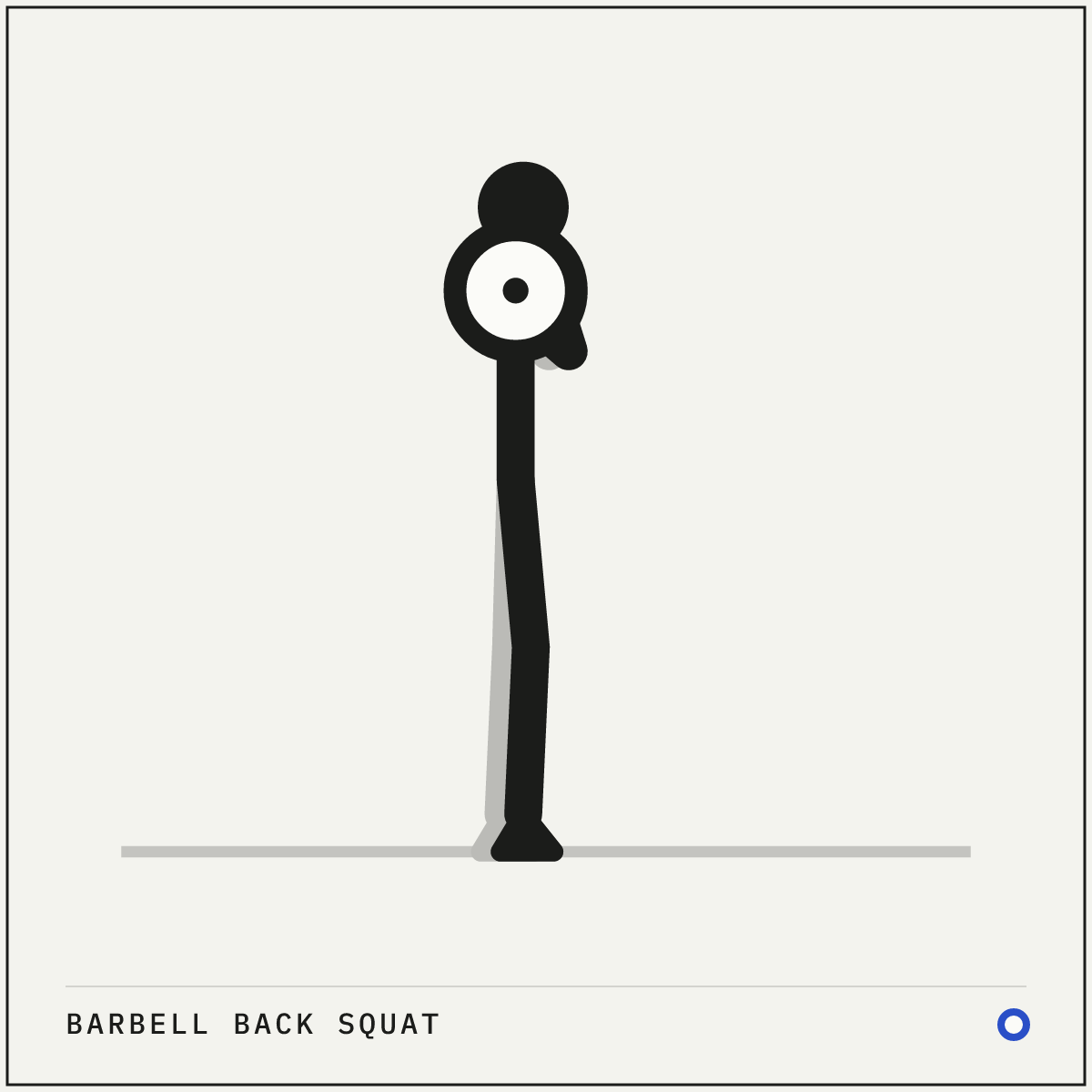
Stand tall
01 Stand tall
Bar on the upper back, hands gripping outside the shoulders.
02 Bottom
Sit between the heels until the hip crease reaches knee height.
How to do it
Setup
- Set the bar on the muscle across your upper back, not on your neck.
- Grip outside your shoulders and squeeze your shoulder blades together to build a shelf for it.
- Step back with your feet shoulder-width apart and your toes slightly out.
Execution
- Take a big breath and tighten your stomach before every rep.
- Bend your knees and hips together, sitting down until your hip crease reaches knee level.
- Drive your whole foot into the floor and stand, exhaling past the hardest point.
BreathingBreathe and brace at the top, never partway through a rep under load.
Cues and mistakes
Check every rep
- Take a full breath and brace before you start down.
- Knees track out over your toes the whole way down and up.
- The bar travels straight up and down over the middle of your foot.
What goes wrong
- Cutting the depth short as the weight gets heavier.
- Knees caving inward out of the bottom.
- Hips shooting back while your chest drops, which turns it into a bad morning stretch.
Safety
- Squat inside a rack with the safety pins set at the right height whenever you train near your limit.
- Add weight only when every rep of every set moves the same way.
General guidance, not medical advice. See how Setkit works.
Notes
The back squat’s advantage is arithmetic. No other squat lets you hold this much weight in a stable position, which makes it the strongest driver of lower-body strength available. That same capacity is why it needs more setup, more technique and more respect than everything leading up to it.
Earn it in order. A bodyweight squat to full depth, then a goblet squat with a weight you are confident with, then the empty bar. The bar brings two new problems. You have to balance a long bar across your shoulders, and you have to brace hard enough to keep your trunk rigid underneath it. Learn both with the empty bar before adding plates.
Progression is the entire point. Small, boring, consistent jumps with identical technique will carry you for years. The day your form changes to finish a set is the day to back off. A rack with safety pins turns the most intimidating lift in the gym into one of the safest.