Back Widow
A rare equipment-free back exercise where you drive your elbows into the floor to lift your torso.
TrainsUpper backLats
NeedsBodyweight
The movement
2 stages
Bottom
01 Bottom
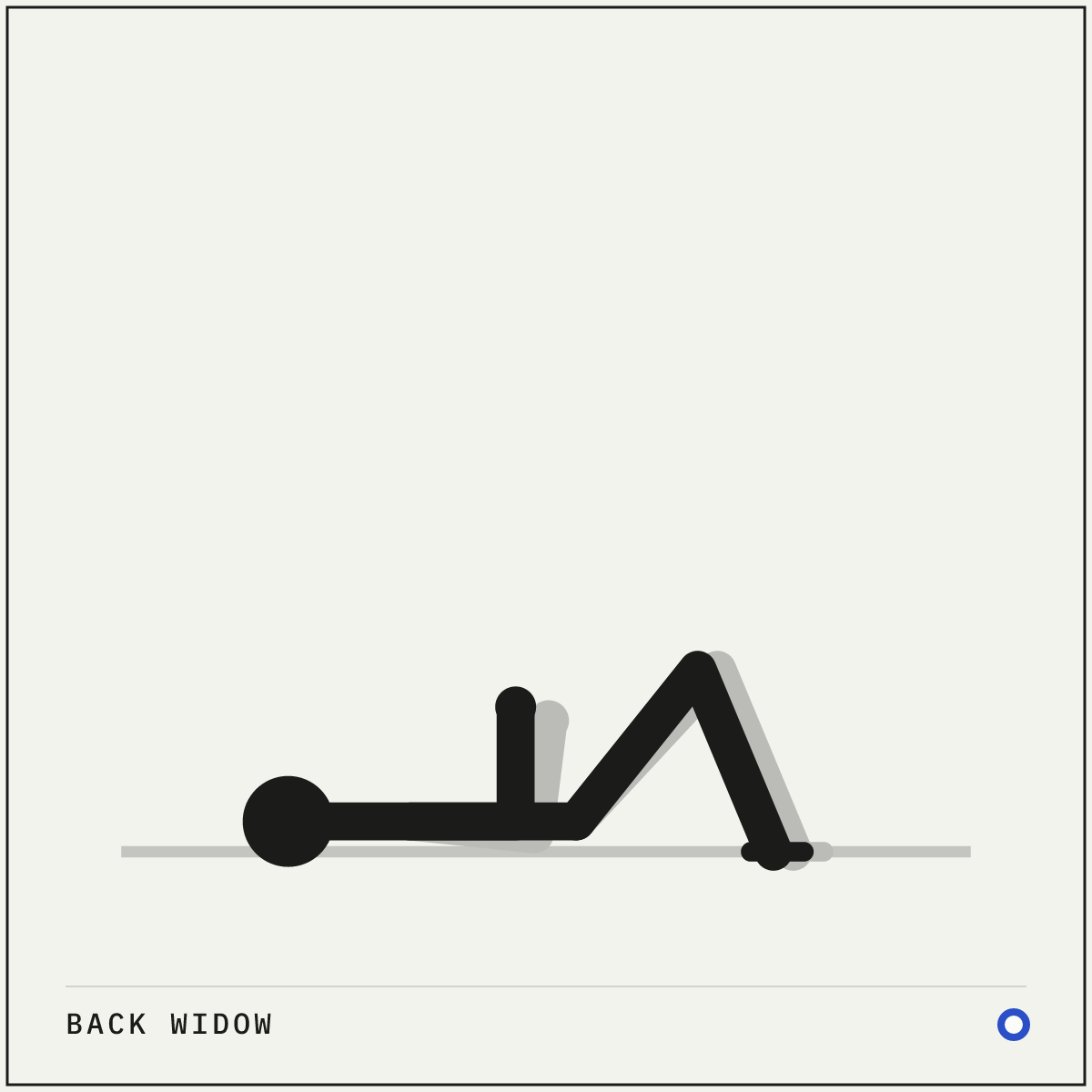
Lie face-up with elbows resting on the floor.
02 Top
Drive your elbows into the floor to lift your upper back.
How to do it
Setup
- Lie face-up on the floor with your knees bent and feet flat.
- Flare your arms out so your elbows rest on the floor at a 90-degree angle.
Execution
- Drive your elbows hard into the floor.
- Squeeze your shoulder blades together to lift your upper back off the ground.
- Lower yourself back to the floor under control.
BreathingExhale as you pull yourself up, inhale as you lower.
Cues and mistakes
Check every rep
- Push the floor away with your elbows to lift your body.
- Keep your head neutral; do not strain your neck forward as you lift.
What goes wrong
- Crunching the abs or throwing the head forward to initiate the lift instead of pulling with the back.
- Pushing off with the heels to lift the hips, turning the movement into a glute bridge.
Safety
- Perform this on a mat or carpet; driving your elbows into hard floors can be painful.
General guidance, not medical advice. See how Setkit works.
Notes
Most home training has no horizontal pull in it at all. A pull-up bar gives you vertical pulling, but rowing requires equipment. The back widow fills this gap: it is one of the only ways to train the upper back and rear delts without any gear whatsoever.
It is an intermediate movement because it requires a mind-muscle connection to work. It is very easy to cheat the back widow by crunching your abs, thrusting your hips, or simply throwing your head forward. The power must come entirely from driving the elbows into the floor and squeezing the shoulder blades together. When done correctly, the range of motion is short, but the contraction in the upper back is intense.