Barbell reverse curl
A curl with an overhand grip on the bar. It shifts the work onto the forearm and the muscle under the biceps.
The movement
2 stages
Arms long
01 Arms long
Bar hanging at the thighs, overhand grip, elbows pinned to the sides.
02 Curl
Curl to the shoulders, wrists flat, elbows still at your ribs.
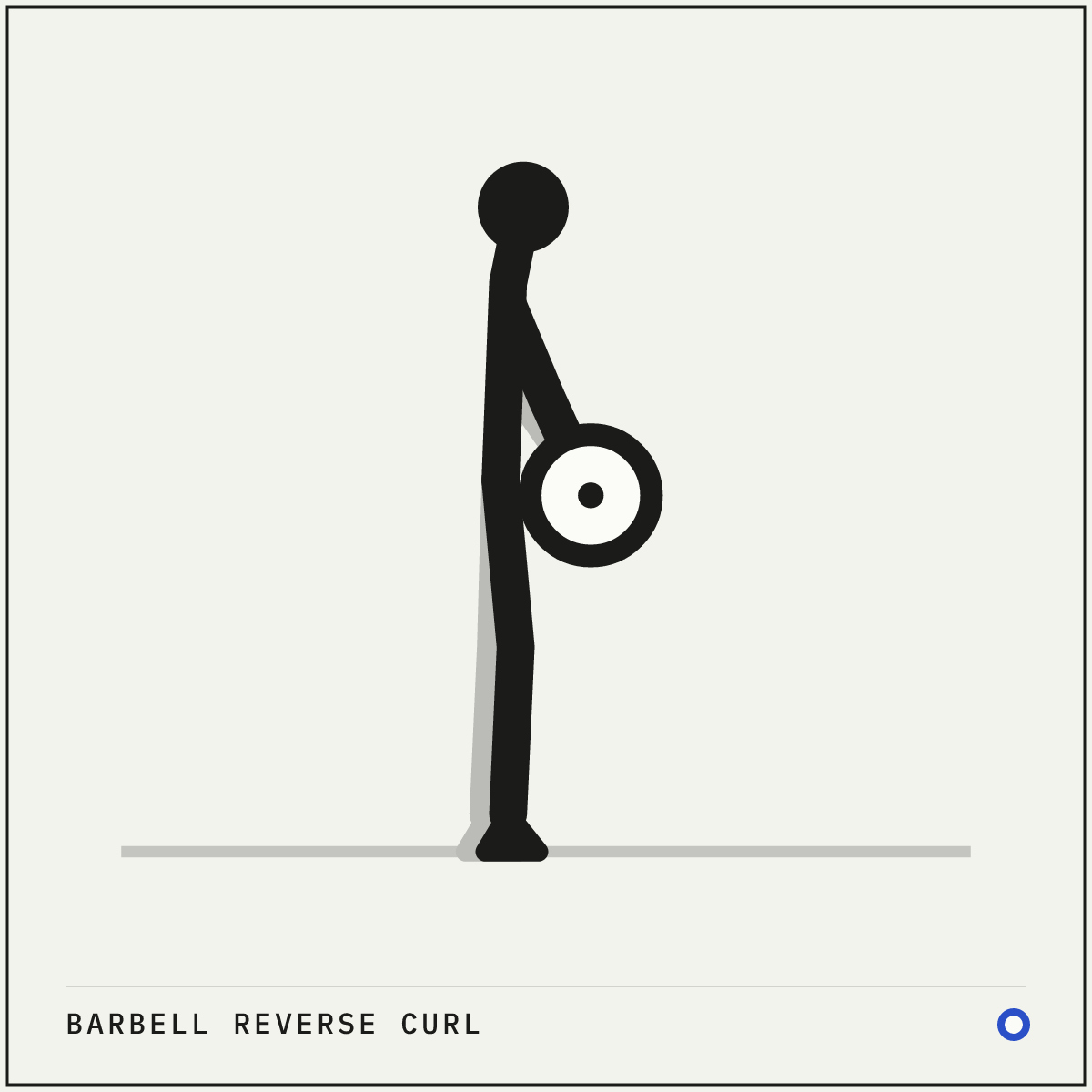
How to do it
Setup
- Stand tall holding the bar against your thighs with an overhand grip at about shoulder width.
- Pin your elbows to your sides, where they stay for the whole set.
Execution
- Curl the bar toward your shoulders by bending only your elbows, keeping your wrists flat.
- Squeeze at the top without letting your elbows drift forward.
- Lower all the way to straight arms on a slow count.
BreathingExhale as you curl, inhale as you lower.
Cues and mistakes
Check every rep
- Keep your wrists flat. Do not let them break backward under the bar.
- Elbows stay at your ribs from first rep to last.
What goes wrong
- Letting the wrists bend back to compensate, which turns the exercise into a wrist exercise and invites elbow pain.
- Loading the bar like a standard curl. This grip is weaker and moves less weight.
- Rocking the hips to swing the bar past the hard middle of the rep.
Safety
- This grip puts real strain on the wrists and the tendons near the elbow. Start light, keep the wrists flat, and end the set as soon as they start to break.
General guidance, not medical advice. See how Setkit works.
Notes
Turning your grip over changes which muscles do the lifting. A standard curl puts the biceps in its strongest position. Flipping to an overhand grip moves real work onto the muscle underneath the biceps and onto the forearm, both of which barely contribute to a palms-up curl.
Expect to load the bar much lighter than a standard curl. The overhand position is weaker. Trying to match your normal curl weight here is the fastest way to start swinging the bar, or feeling it in your wrists instead of your arms. Less weight moved strictly is the entire point of doing this grip.
The wrists carry more of the strain than in a standard curl, because the overhand grip cannot roll to protect them the way a palms-up grip does. Keep them flat under the bar rather than letting them break backward, and treat any ache there as a signal to drop the weight rather than push through it.