Barbell reverse lunge
A heavy reverse lunge with a barbell racked across your shoulders. It demands a highly braced core to keep the spine neutral under load.
The movement
2 stages
Stand tall
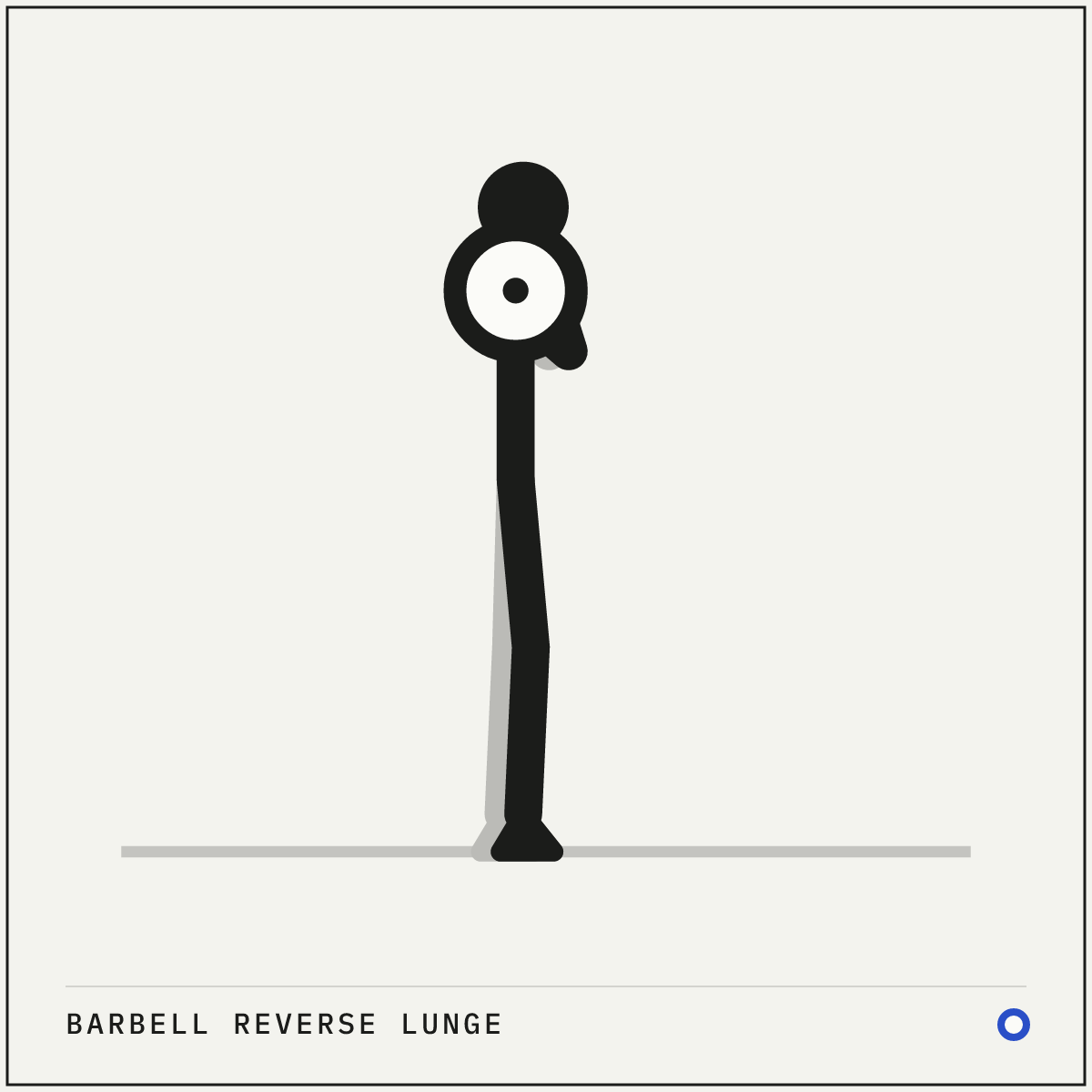
01 Stand tall
Bar on the upper back, feet hip-width, eyes forward.
02 Bottom
Step back and lower the rear knee to just above the floor.
How to do it
Setup
- Rack a barbell across your upper back, stepping out of the rack.
- Stand tall with your feet hip-width apart and your core braced.
Execution
- Step one foot backward and sink down until your rear knee hovers just above the floor.
- Drive through the heel of your front foot, keeping your chest tall, to return to the standing position.
BreathingInhale deep and brace hard as you step back, exhale as you drive back up to the start.
Cues and mistakes
Check every rep
- Keep your chest lifted; don't let the barbell fold you forward.
- Pull the bar down into your back to lock your lats and brace your core.
What goes wrong
- Letting the back round or chest collapse under the load.
- Stepping backward as on a tightrope instead of keeping your feet on train tracks.
Safety
- Always lunge inside a power rack with safety pins set appropriately. Dropping a barbell during a lunge is much harder than dropping dumbbells.
General guidance, not medical advice. See how Setkit works.
Notes
The barbell lunge allows you to load the lunge pattern heavily once your grip strength maxes out on the dumbbell variant. However, it shifts the center of gravity up high onto your shoulders, making the movement much less stable and much more demanding on the core.
Because you are stepping backward while balancing a load on your shoulders, a tight core brace and a strong grip on the bar (pulling it down into your traps) are essential to prevent the weight from folding you forward. It is a fantastic mass builder for the legs, but should be respected with proper safety measures (rack pins) since bailing a barbell lunge is difficult.