Dumbbell reverse lunge
A reverse lunge loaded with dumbbells. It demands more stability than a barbell lunge and lets you fail safely just by dropping the weights.
The movement
2 stages
Stand tall
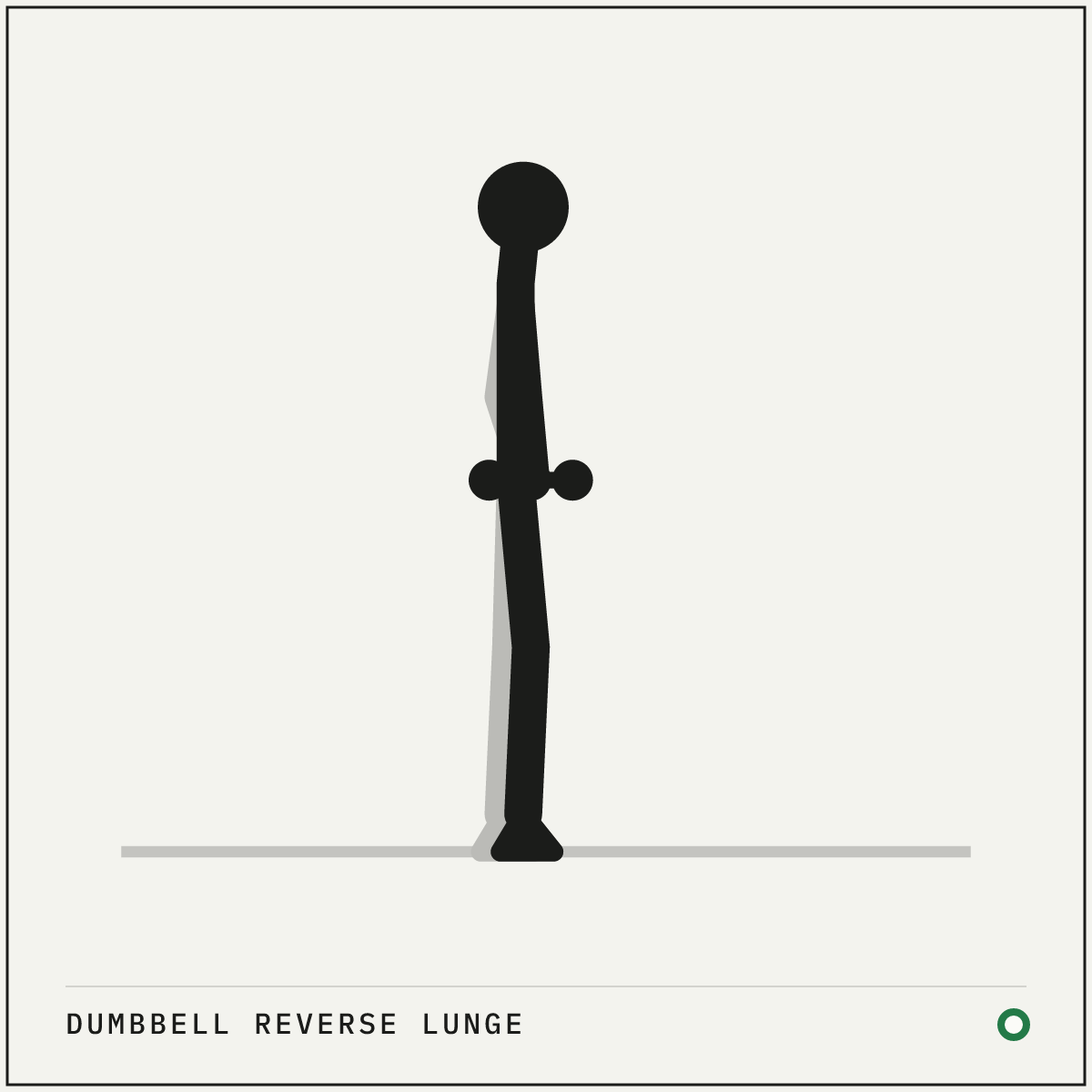
01 Stand tall
Feet hip-width, holding dumbbells at your sides.
02 Bottom
Step back and lower the rear knee to just above the floor.
How to do it
Setup
- Stand tall holding a dumbbell in each hand at your sides.
- Keep your chest up and your feet hip-width apart.
Execution
- Step one foot backward and sink straight down until your rear knee hovers just above the floor.
- Drive through the heel of your front foot to return to the standing position.
BreathingInhale as you step back and drop, exhale as you drive back up to the start.
Cues and mistakes
Check every rep
- Keep your front shin mostly vertical.
- Don't let the weights swing; keep them locked at your sides.
What goes wrong
- Stepping your back foot directly behind the front one, which leaves you no width to balance on.
- Letting your chest collapse forward as you sink down.
Safety
- If you lose your balance, simply drop the dumbbells to your sides.
General guidance, not medical advice. See how Setkit works.
Notes
The dumbbell reverse lunge is where most people start with loaded single-leg work. Because the weight hangs in your hands at your sides, your center of gravity stays low. That makes it steadier than carrying a barbell across your back, and it is why beginners can load this pattern before they can load a squat.
It is also an excellent grip builder. High-rep walking lunges or heavy static lunges will tax your forearms simply from holding the dumbbells for the duration of the set. If grip becomes a limiting factor before your legs are fatigued, straps are a perfectly valid addition.