Handstand push-up
A press done upside down against a wall, moving your whole bodyweight overhead. The top of the bodyweight pressing ladder.
TrainsShoulders
NeedsBodyweight
The movement
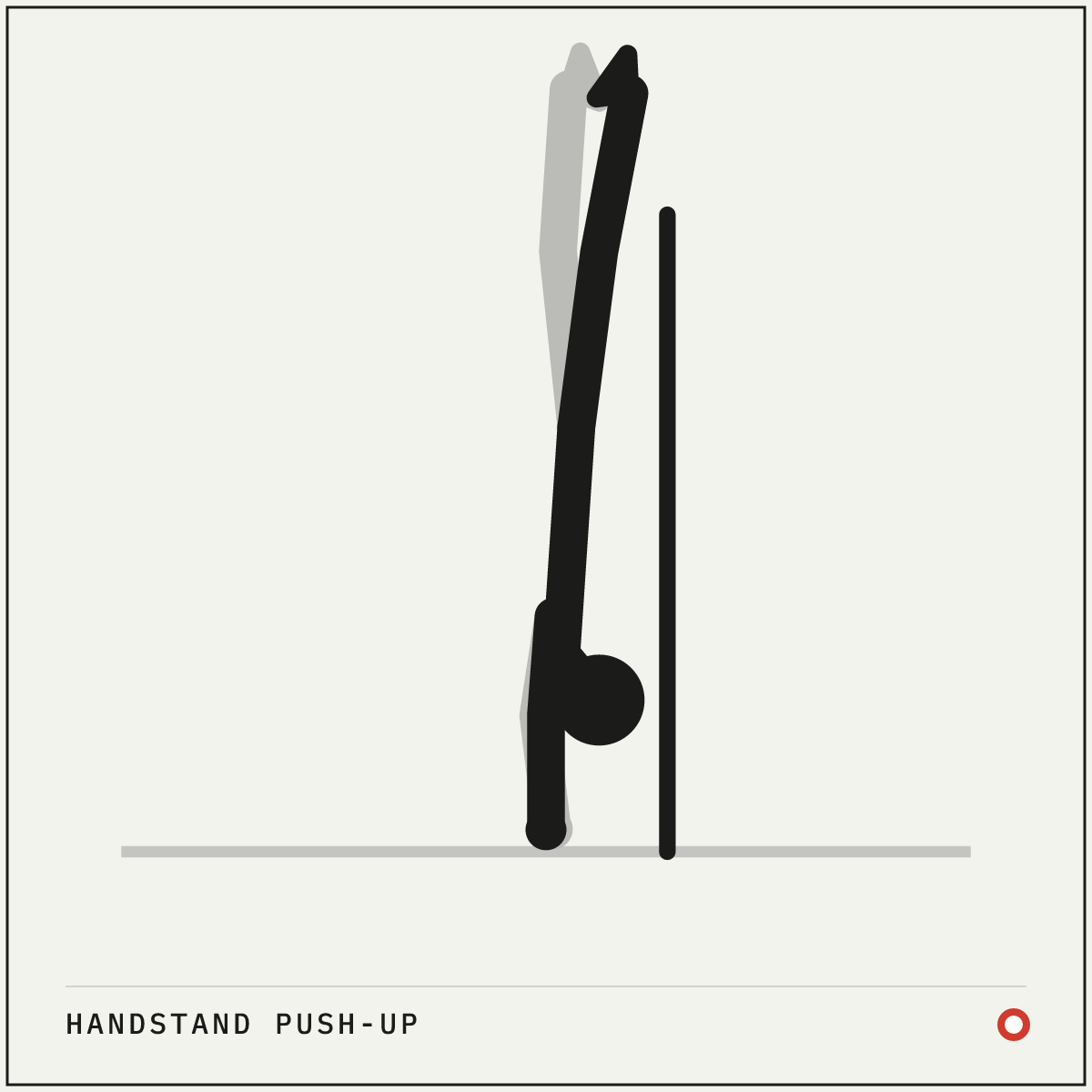
2 stages
Locked out
01 Locked out
Heels on the wall, body in one line, elbows completely straight.
02 Head to the floor
Lower the crown of the head to the floor with the elbows bending back.
How to do it
Setup
- Place your hands on the floor about a hand's length from a wall, slightly wider than your shoulders.
- Kick up one leg at a time until your heels rest on the wall and your body is close to straight.
- Squeeze your legs together and brace before the first rep.
Execution
- Bend your elbows and lower the top of your head toward the floor under control.
- Touch down lightly, without resting.
- Press back up to straight arms, finishing tall through your shoulders.
BreathingInhale as you lower, exhale hard as you press.
Cues and mistakes
Check every rep
- Elbows bend back toward your body, never flared straight out to the sides.
- Keep your ribs pulled in so your back does not arch off the wall.
What goes wrong
- Dropping fast and bouncing your head off the floor.
- Arching into a banana shape, which shortens the range and strains the lower back.
- Kicking up with locked-out panic instead of a controlled entry. Practice the wall handstand alone first.
Safety
- Bail by tucking your chin and rolling out of the kick-up, or by walking your feet down the wall. Rehearse both on purpose before you train the press, and put a cushion under your head while the negative is still shaky.
General guidance, not medical advice. See how Setkit works.
Notes
The handstand push-up is an overhead press with your bodyweight on the bar. Every kilo you own travels through your shoulders and triceps, which puts it beyond a strict barbell press for most people, and the wall handles the balance so the pressing muscles get all of the work.
The gap between the pike push-up and this is real, and jumping it too early is the usual failure. Bridge it in two steps. First earn a calm sixty-second wall handstand, because you cannot press from a position you can barely hold. Then train only the lowering phase for a few weeks, taking three to five slow seconds down, until the full negative is boring. The press up will arrive on its own.
Count only full-range reps. Head to the floor and arms to full lockout counts as one. If the full range is not there yet, raise the floor with a book under each hand and shrink the stack over time, and keep feeding the movement with pike push-ups on your other pressing days.