Kettlebell upright row
A kettlebell held in both hands and pulled up the midline to chest height, elbows leading high. A vertical pull for the shoulders and traps from a single bell.
TrainsShouldersUpper back
NeedsKettlebell
The movement
2 stages
Arms long
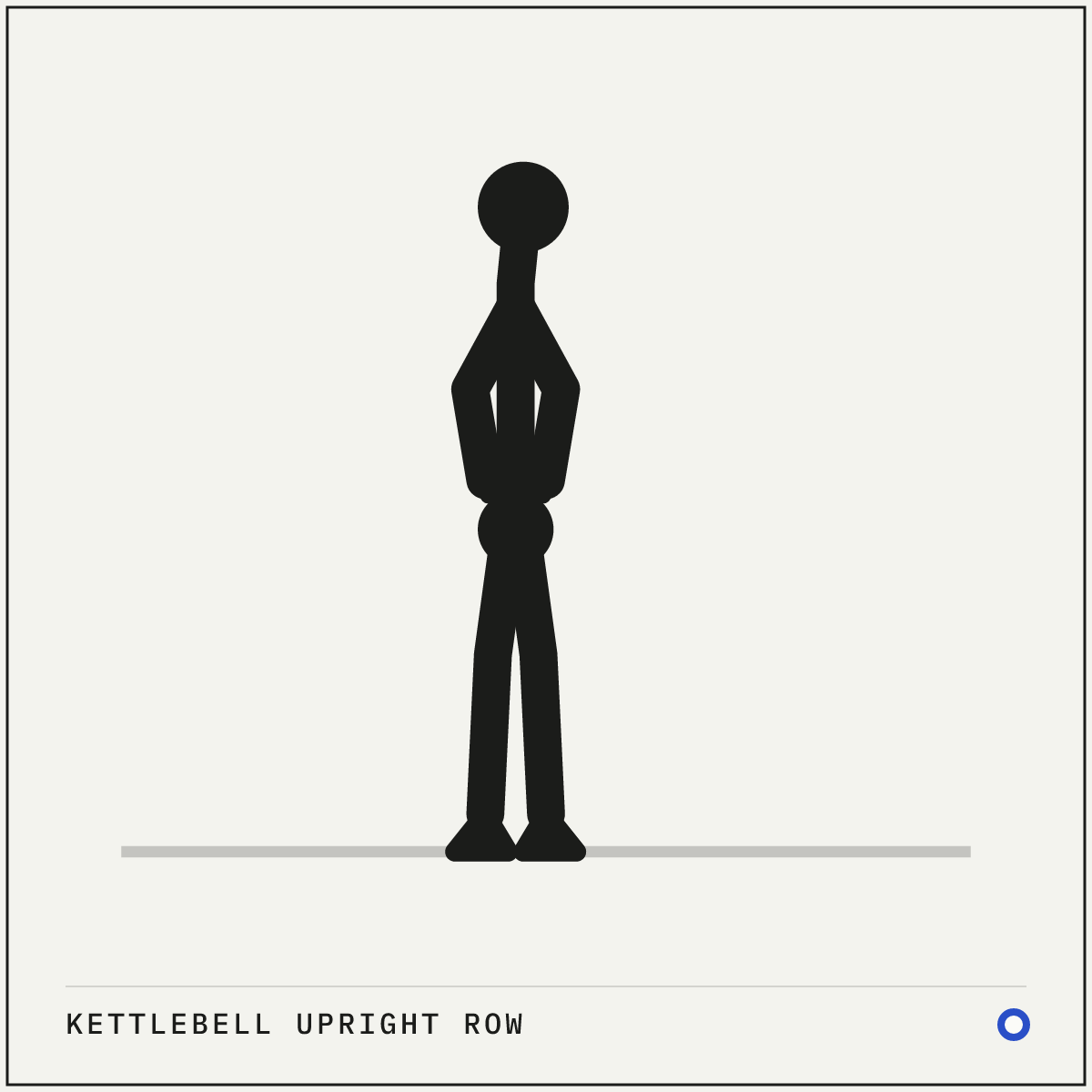
01 Arms long
Stand tall with the bell hanging at your thighs in both hands.
02 Elbows high
Drive your elbows up and out, and stop when they reach shoulder height.
How to do it
Setup
- Hold one kettlebell by the handle with both hands, palms facing your body.
- Stand tall with your feet hip-width apart and let the bell hang against your thighs.
Execution
- Pull the bell straight up the front of your body by driving your elbows up and out to the sides.
- Stop when your upper arms reach shoulder height and the bell sits near the top of your chest.
- Lower under control until your arms hang straight again.
BreathingExhale as you pull up, inhale as you lower.
Cues and mistakes
Check every rep
- Lead with your elbows, and keep them above your hands the whole way up.
- Stop the pull when your upper arms reach shoulder height, no higher.
What goes wrong
- Pulling above shoulder height, which rolls the shoulders in and pinches the joint.
- Bending your knees and driving with your legs to launch the bell.
- Letting your hands lead so your elbows stay low, which turns it into a front raise.
Safety
- Pulling the bell above your collarbone jams the shoulder joint and is where upright rows hurt people. Keep the top at chest height and stop the set if you feel any pinch.
General guidance, not medical advice. See how Setkit works.
Notes
The upright row gives a kettlebell setup something it otherwise lacks. A single bell rows well and swings well, but with no bar to hang from there is no pull-up and no pulldown. This is the vertical pull that fills that gap, and it trains the side and rear shoulders and the traps in one movement.
Elbow height is the whole exercise. The elbows have to lead and stay above the hands for the shoulders and traps to do the work. Let the hands rise first and the elbows trail low, and the load slides onto the front of the shoulders as a clumsy front raise. Elbow height is the thing to watch for the whole set.
One bell held in two hands keeps the load on the midline, which is easier to control than two separate weights. The catch is the same one every upright row carries. Pulling the bell up under your chin with the elbows climbing past your shoulders pins the arm bone against the roof of the shoulder joint, and that is the position that aches. Keep the top at chest height and the elbows level with your shoulders. If they still complain, a lateral raise and a rear-delt fly train the same muscles without the pinch.