Band-assisted pull-up
A band carries some of your bodyweight so you can practice real pull-ups, through the full range, today.
TrainsLats
The movement
3 stages
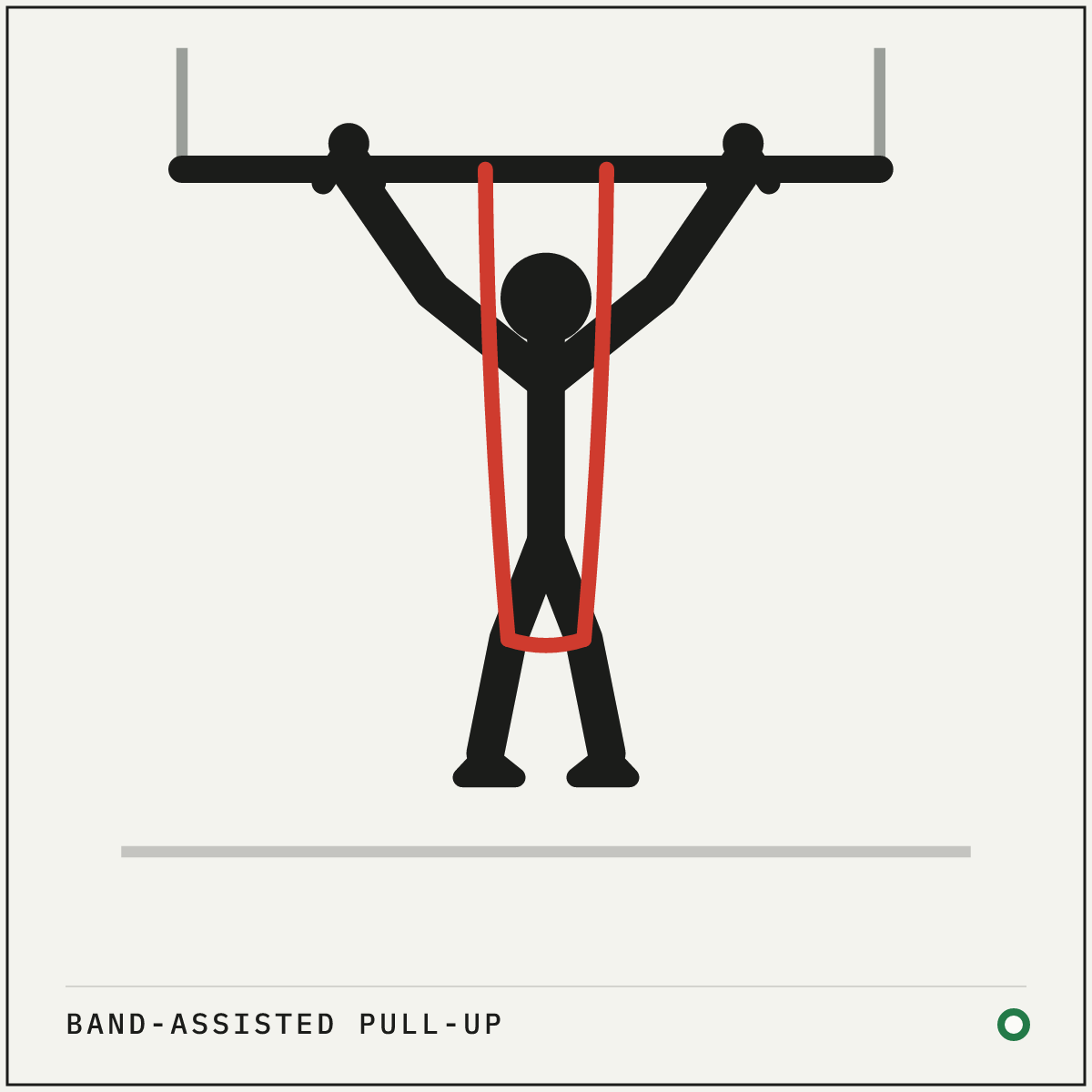
Knees in the band
01 Knees in the band
Loop the band over the bar and settle both knees into the bottom of it.
02 Band assists
Pull up smoothly; the stretched band helps most at the bottom.
03 Finish the rep
Clear the bar under your own control as the band goes slack.
How to do it
Setup
- Loop a band over the bar and pull one end through the other so it hangs down.
- Put one foot in the loop for a steadier position, or both knees for more help.
- Grip the bar and settle into a hang with straight arms.
Execution
- Pull your chin over the bar exactly as you would in a full pull-up.
- Lower under control to a full hang, where the band helps most.
- Keep your body still, without kicking off the band's stretch.
Cues and mistakes
Check every rep
- Let the band help you off the floor, not through the top.
- Work the last few inches hardest, because that is where the band gives least.
What goes wrong
- Using a band so thick that the reps teach bouncing instead of pulling.
- Cutting the bottom of the range short, where the band makes it easy.
Safety
- Hold the band while you put your foot in, because a loop that slips under tension snaps upward. Step out of it deliberately at the end of each set.
General guidance, not medical advice. See how Setkit works.
Notes
Pull-ups present a circular problem. The best way to get good at them is to do them, and you cannot do them yet. A loop band solves it by carrying part of your weight, which makes the full movement from a dead hang to a chin over the bar available on day one, at enough reps to matter.
The way a band stretches happens to suit this well. It helps most at the bottom, where you hang deepest and are weakest, and it fades away toward the top, where the hard part of the pull is. Your job is to not bounce out of that bottom stretch. Every rep should look like a slow, strict pull-up that simply weighs less.
Progress by using a thinner band rather than by adding messy reps. Go from a thick loop to a thin one, mix in negatives, then take the first strict rep. Keep band reps in the program afterward, because they are good volume even once you no longer need them.