Negative pull-up
Skip the way up and train the way down. Slow lowering that builds exactly the strength a pull-up needs.
TrainsLats
NeedsPull-up bar
The movement
3 stages
Step to the top
01 Step to the top
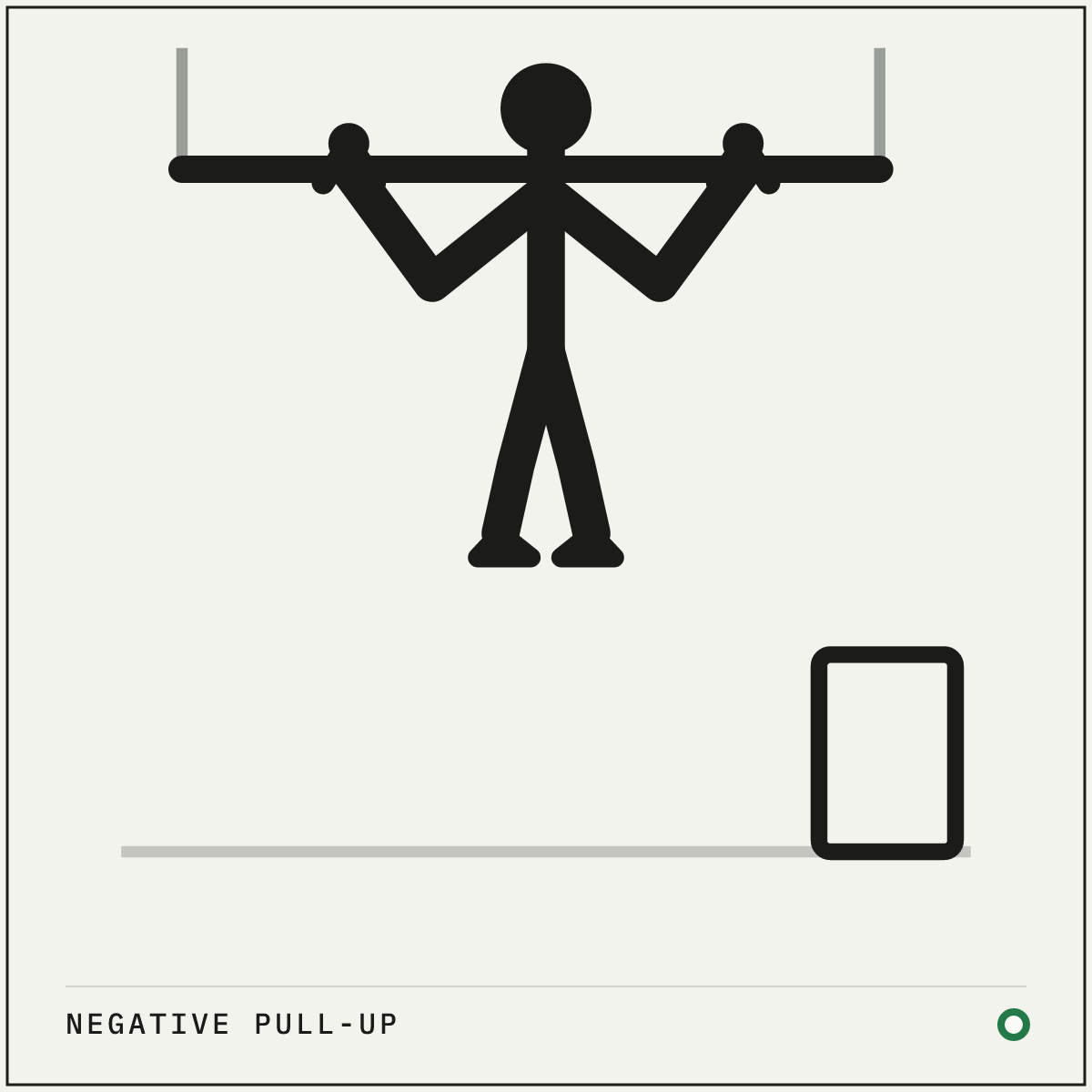
Use the box to start with the chin already over the bar.
02 Own the midpoint
Lower slowly and fight to keep the elbows bent through halfway.
03 Finish at full hang
Take the full three to five seconds until both arms are long.
How to do it
Setup
- Use a box or a bench, or jump, to start at the top of a pull-up with your chin over the bar.
- Grip the bar with your palms facing either way, thumbs wrapped around.
Execution
- Lower yourself as slowly as you can, aiming for three to five seconds at an even pace.
- Fight hardest through the top half, which is where pull-ups are usually lost.
- Finish hanging with straight arms, step back up, and repeat.
Cues and mistakes
Check every rep
- Lower for three to five seconds under control.
- Keep your chest up the whole way down instead of sinking.
What goes wrong
- Dropping through the top half and only slowing down near the bottom.
- Doing so many that the last few turn into free-falls.
Safety
- Stop while your lowering is still slow. Fast negatives when you are tired are hard on the elbows and shoulders.
General guidance, not medical advice. See how Setkit works.
Notes
Muscles are stronger lowering a weight than lifting it. That means the strength to let yourself down slowly from the bar exists before your first pull-up does. Negatives use that gap. Every controlled descent trains the pulling muscles through the whole range at a difficulty the way up cannot yet give you.
This is the most effective single step toward a first strict pull-up, and the recipe is short. A few sets of three to five slow lowers, a few times a week. When a lower stops being slow, the set is finished. A fast lower trains very little, so the slowness is the part to protect.
Combine them with band-assisted reps, which practice the way up, and dead hangs, which build the grip to stay on the bar. Together those three usually produce a first unassisted rep in weeks rather than months.