Dead hang
Hang from the bar with straight arms. Grip, shoulders and patience, trained by holding still.
TrainsLats
NeedsPull-up bar
The movement
2 stages
Passive hang
01 Passive hang
Let the body hang long with straight elbows and a secure overhand grip.
02 Active hang
Pull the shoulder blades down and the whole body rises, elbows still straight.
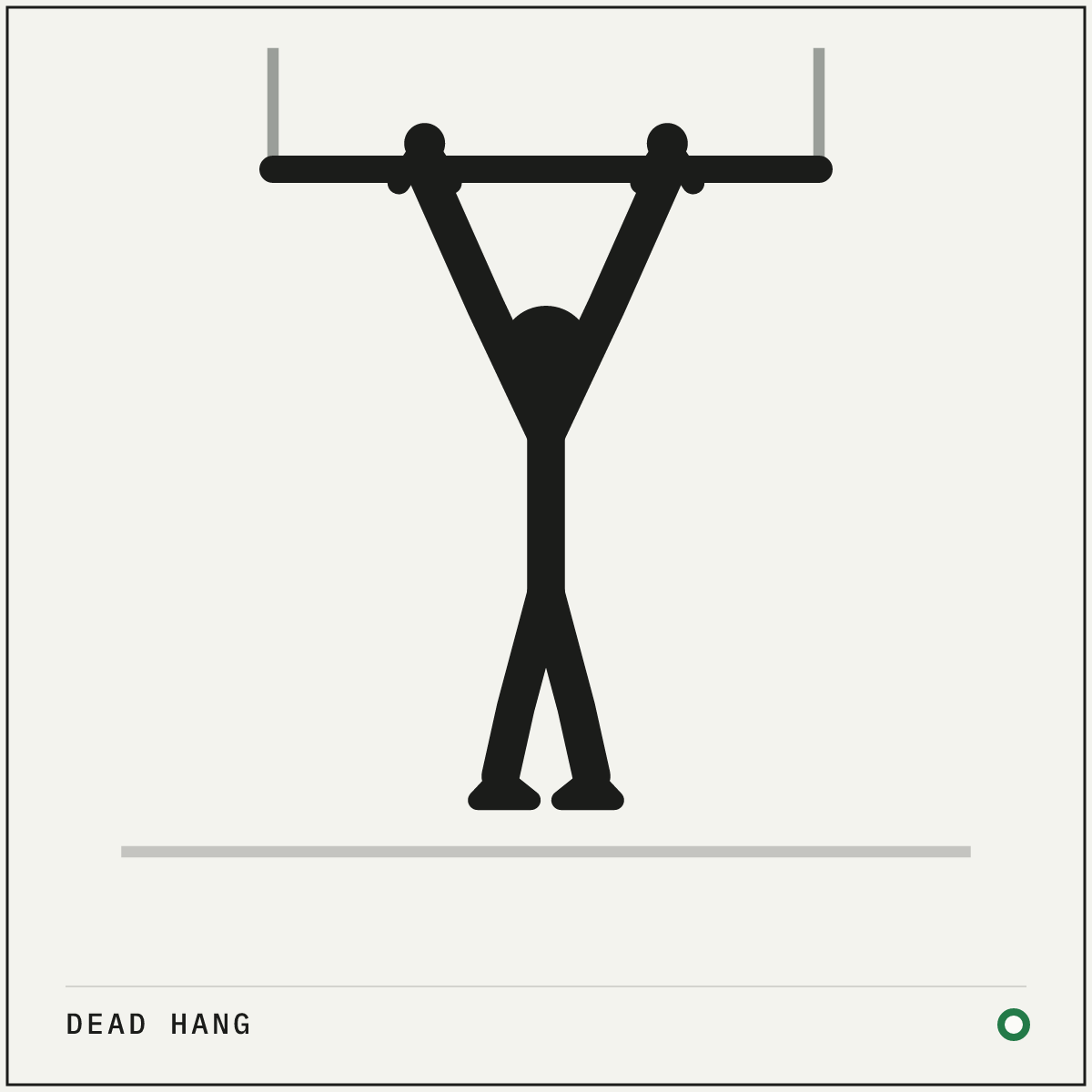
How to do it
Setup
- Grip the bar with your palms facing away, hands about shoulder-width apart, thumbs wrapped.
- Step off your support and hang with straight arms and your feet clear of the floor.
Execution
- Let your body hang long while your hands grip hard.
- For an active hang, pull your shoulder blades slightly down without bending your elbows.
- Hold for time, then step down under control.
Cues and mistakes
Check every rep
- Keep your legs still and your jaw loose; the work is in your hands.
- Alternate relaxed hangs with hangs holding your shoulder blades down.
What goes wrong
- Letting your shoulders sit up by your ears for the whole hold.
- Dropping off mid-swing instead of stepping down.
Safety
- Grip fails all at once rather than gradually. Hang over clear floor and step down before you reach that point.
General guidance, not medical advice. See how Setkit works.
Notes
Hanging is the step most pull-up plans skip. Before your lats can pull, your hands have to hold on. A solid sixty-second hang is the difference between training pull-ups and just about surviving the grip part of them.
More is happening than grip work. Hanging relaxed stretches the lats and shoulders through their fullest range, and for a lot of people it is the best shoulder mobility work available. The active version, with your shoulder blades pulled down and your arms straight, is the first inch of every pull-up practiced on its own.
It is also the easiest exercise here to program, because you just add up time. Twenty seconds becomes forty-five. Two hangs become four. Relaxed hangs become active ones. Add it to the end of any session that takes you past a bar.