Hanging leg raise
Hang from the bar and raise your legs. Core training with no floor to help you and a real demand on your grip.
TrainsCore
NeedsPull-up bar
The movement
3 stages
Quiet hang
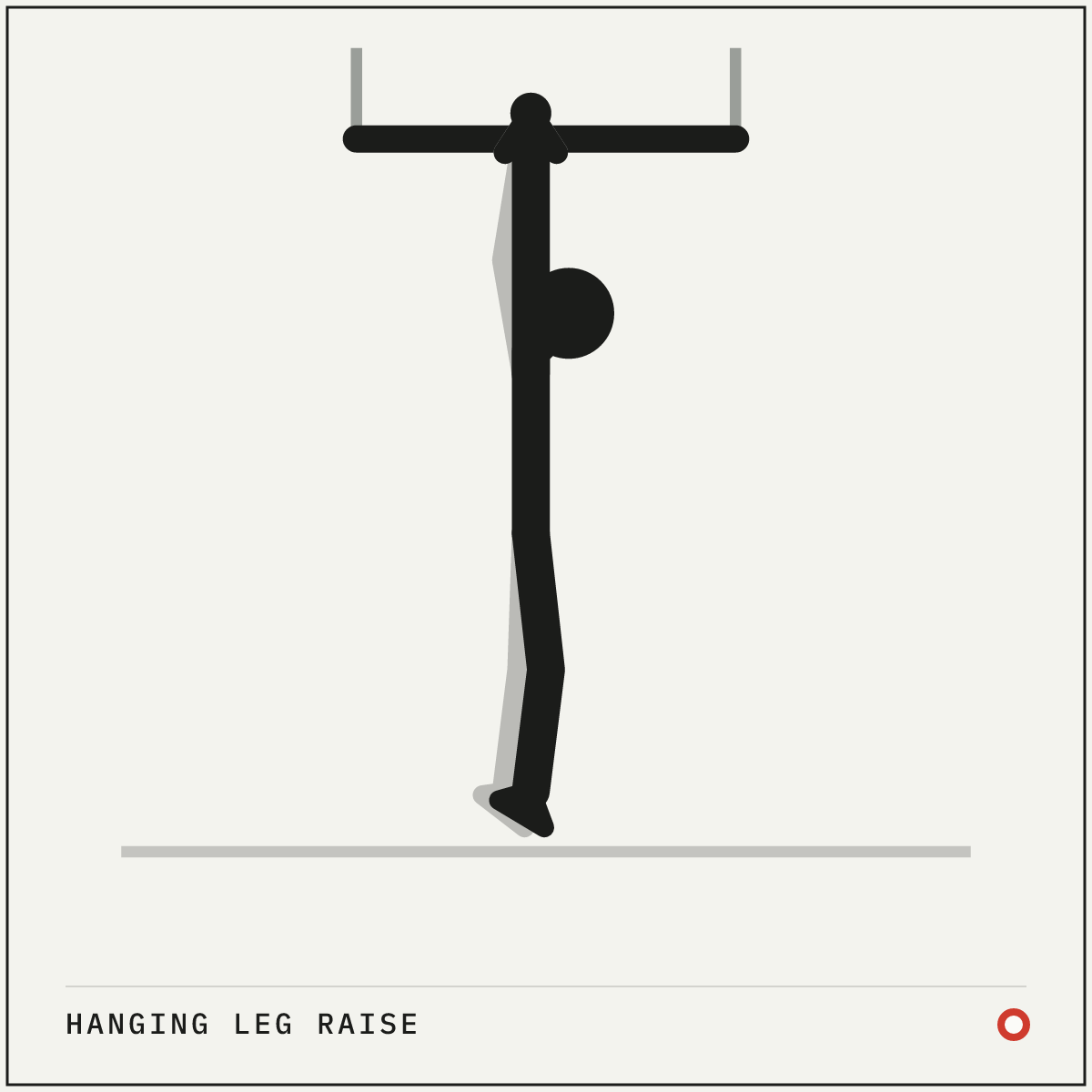
01 Quiet hang
Hang tall and still, ribs down, before the first rep.
02 Knees pass hips
Curl the knees up in front of you, not out behind.
03 Pelvis curls up
Tilt the pelvis back at the top so the knees finish above hip height.
How to do it
Setup
- Hang from the bar with your shoulders set and your body still.
- Pull your ribs down and tuck your pelvis slightly before the first rep.
Execution
- Curl your knees up toward your chest, tilting your pelvis back as they rise.
- Pause briefly at the top with your knees at or above hip height.
- Lower your legs slowly to a full hang without swinging.
Cues and mistakes
Check every rep
- Tilt your pelvis up at the top, because that is where the stomach works.
- Lower slowly; the way down is the harder half.
What goes wrong
- Swinging into a rhythm and letting momentum raise your legs.
- Arching your back at the bottom between reps.
Safety
- Your grip and shoulders need to be ready first. Be able to hold a 30-second hang before you train this.
General guidance, not medical advice. See how Setkit works.
Notes
Take the lying leg raise, remove the floor’s help, add a demand on your grip, and make your trunk steady a freely hanging body between reps. That is the hanging version, and it is the top of the leg-raise family.
The technique comes down to curling your pelvis. Lifting your knees on their own mostly works the muscles at the front of your hips. Tilting your pelvis backward as your knees rise is what brings your stomach into its strongest position. Curl your hips toward your ribs and the rest follows.
Get rid of the swing and the exercise keeps its value. Pause at the top, lower on a three-second count, and let your body go still before the next rep. Straightening your legs over time turns the knee raise into the full hanging leg raise, and that progression stays difficult for years.