Barbell sit-up
A full sit-up with a barbell held straight over the chest and pushed to the ceiling. Heavy core work that demands shoulder stability.
The movement
2 stages
Lying on back
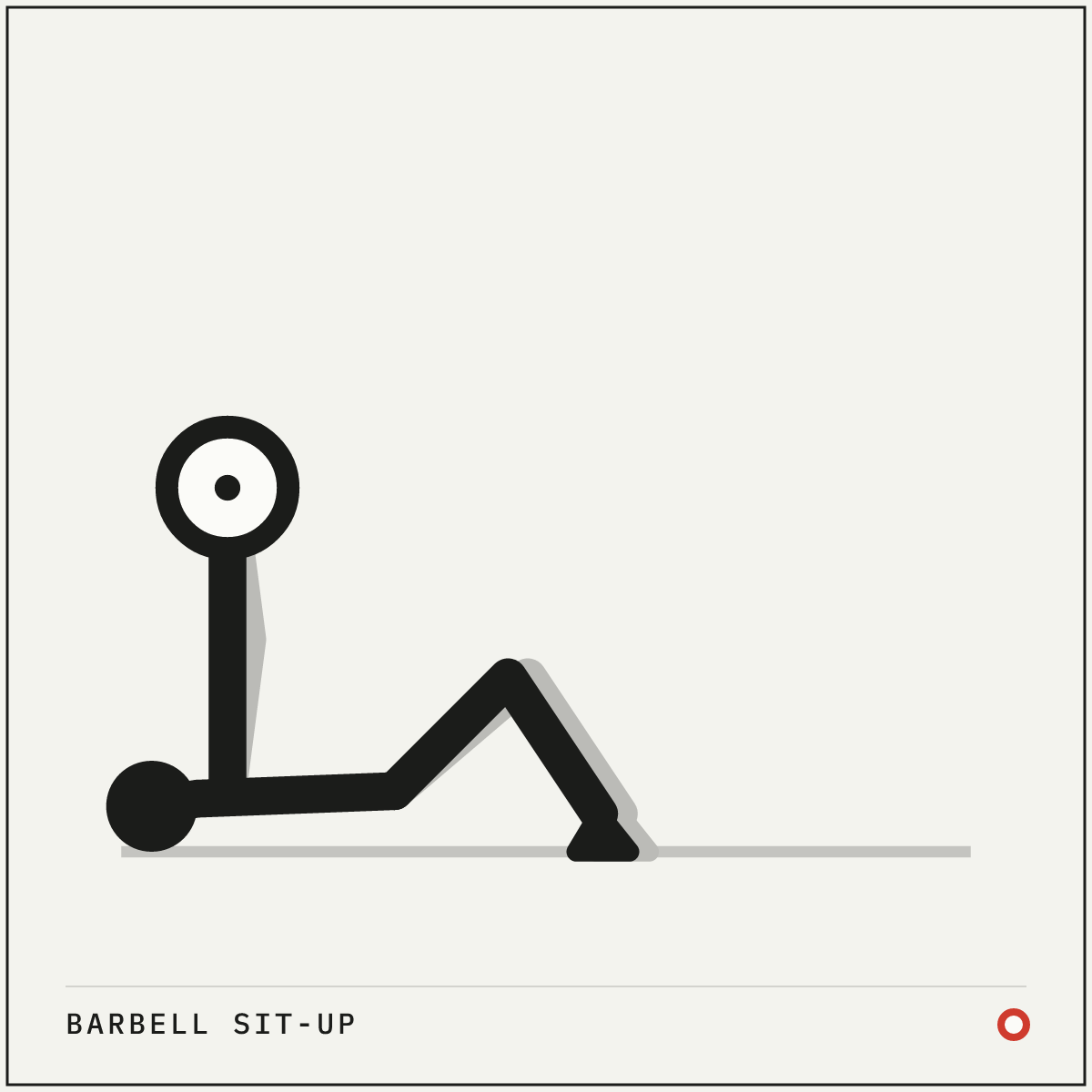
01 Lying on back
Lie on your back, knees bent, holding the bar straight over your chest.
02 Seated overhead
Sit up while driving the bar straight up to the ceiling.
How to do it
Setup
- Lie on your back with your knees bent and feet flat on the floor.
- Hold the barbell straight over your chest with a shoulder-width grip.
Execution
- Sit up by rolling your spine off the floor, keeping your arms straight and driving the bar straight up.
- Finish seated upright with the barbell directly overhead.
- Lower slowly back to the floor, rolling your spine down one vertebra at a time.
BreathingExhale as you sit up, inhale as you lower.
Cues and mistakes
Check every rep
- Push the bar straight up toward the ceiling the whole time.
- Roll your spine up off the floor, rather than keeping your back completely rigid.
What goes wrong
- Letting the bar drift forward to pull you up.
- Hinging at the hips with a flat back instead of flexing the trunk.
Safety
- The bar travels over your face. If your core fails, lower the bar safely to your chest rather than dropping it. Start light.
General guidance, not medical advice. See how Setkit works.
Notes
The barbell sit-up is a demanding exercise that links abdominal strength with shoulder stability. Pressing a weight straight up while sitting up requires the core to work harder because the load moves further from the hips, creating a longer lever arm.
Keeping the bar vertical is the hardest part of the movement. If the bar drifts forward, the shoulders take over and momentum does the work. If the bar drifts back, you lose your balance. Your shoulders must actively adjust the angle as your torso rises, which makes this as much a test of overhead stability as it is of core strength.
Because the weight is suspended over your face and neck, start with a light bar to learn the balance point. If you cannot do a strict bodyweight sit-up or v-up without throwing your arms for momentum, do not add a barbell yet.