Hanging knee raise
A hanging leg raise with your knees bent. The same movement made much easier, and the sensible way into hanging core work.
TrainsCore
NeedsPull-up bar
The movement
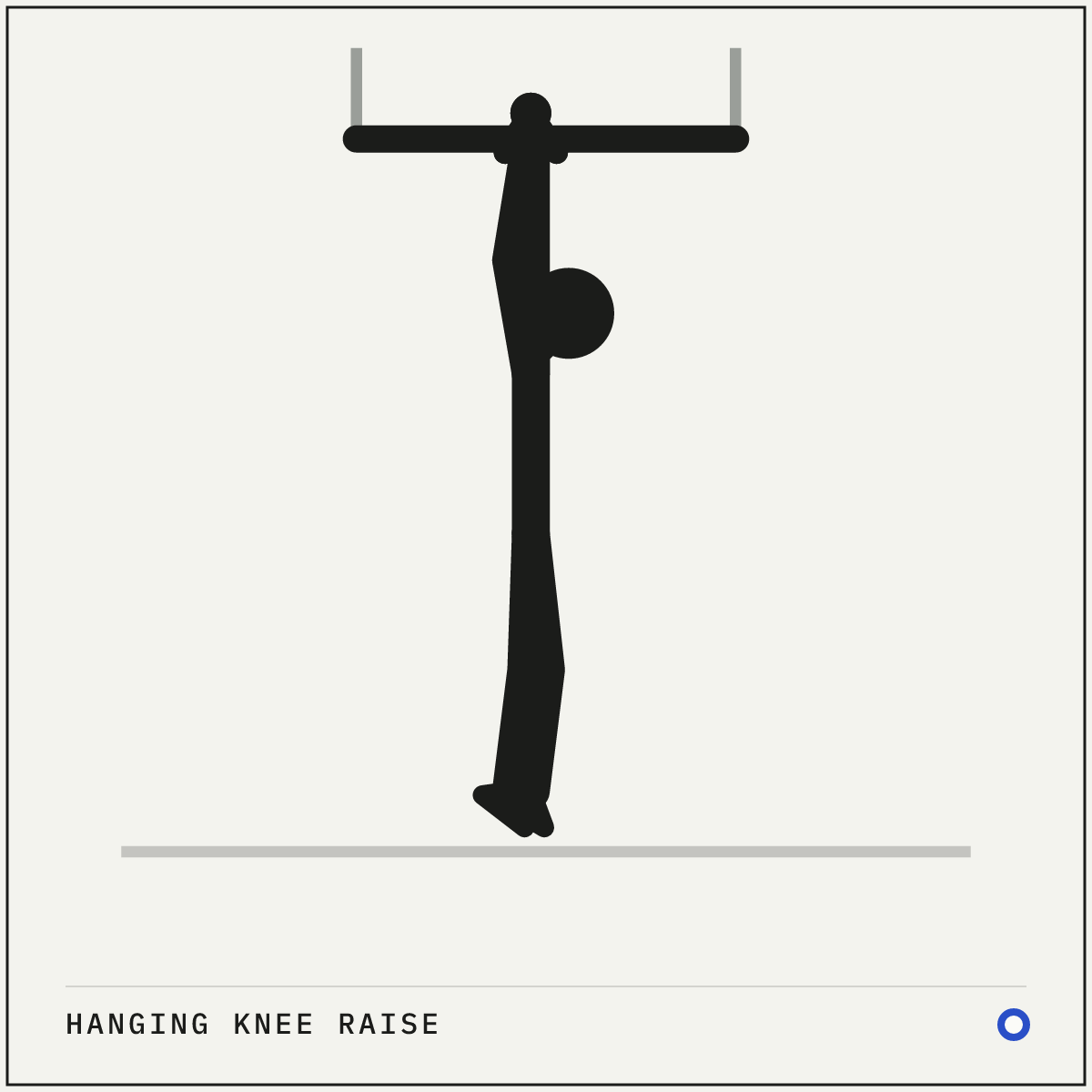
2 stages
Dead hang
01 Dead hang
Hang still with the shoulders pulled down and the body straight before the first rep.
02 Knees to the chest
Draw the knees up, then curl the hips under at the top.
How to do it
Setup
- Hang from a bar with your palms facing away, arms straight and shoulders pulled down away from your ears.
- Let your body settle so it stops swinging before the first rep.
Execution
- Bend your knees and draw them up toward your chest, curling your hips under at the top.
- Pause where your thighs pass horizontal and your lower back has rounded slightly.
- Lower your legs under control until your body is straight and still.
BreathingExhale as your knees rise, inhale on the way down.
Cues and mistakes
Check every rep
- Curl your hips underneath you at the top, after your knees arrive.
- Set your shoulders down before your legs move.
What goes wrong
- Swinging into each rep so momentum does the work.
- Stopping when your thighs reach horizontal without curling your hips, which leaves your stomach barely involved.
- Letting your shoulders ride up toward your ears, which turns a core exercise into a passive hang.
Safety
- Your grip usually gives out before your core does. That is a signal to end the set rather than something to fight, because a tired grip is how people fall off the bar.
General guidance, not medical advice. See how Setkit works.
Notes
Hanging core work is the best there is, and the straight-leg version is far too hard for most people to do properly. Bending your knees makes the movement much lighter while keeping everything that makes hanging valuable. There is no floor to push against, no way for the hips to take a shortcut, and a long body that has to stay quiet.
The top of the rep is the half most people skip. Raising your knees to hip height mostly works the muscles at the front of your hips. Your stomach only really joins in when your pelvis tilts and your hips curl underneath you, which happens in the last few inches. A rep that stops at horizontal trains your hip muscles, and it is why people conclude hanging work does nothing for them.
Swinging is the other failure, and it grows. A rep that starts with a small swing finishes with a bigger one, and by rep six your legs are being thrown rather than lifted. Coming to a complete stop at the bottom of every rep costs you reps and is the difference between training your core and training a rhythm.
Progress by straightening your legs rather than by adding reps. Knees bent, then knees half straight, then fully straight is a ladder that lasts years for most people, and each step is the same exercise made heavier.