Good morning
A hip hinge with the bar on your back. Hamstrings and glutes do the lifting while the back holds the line.
TrainsHamstringsGlutes
NeedsBarbell
The movement
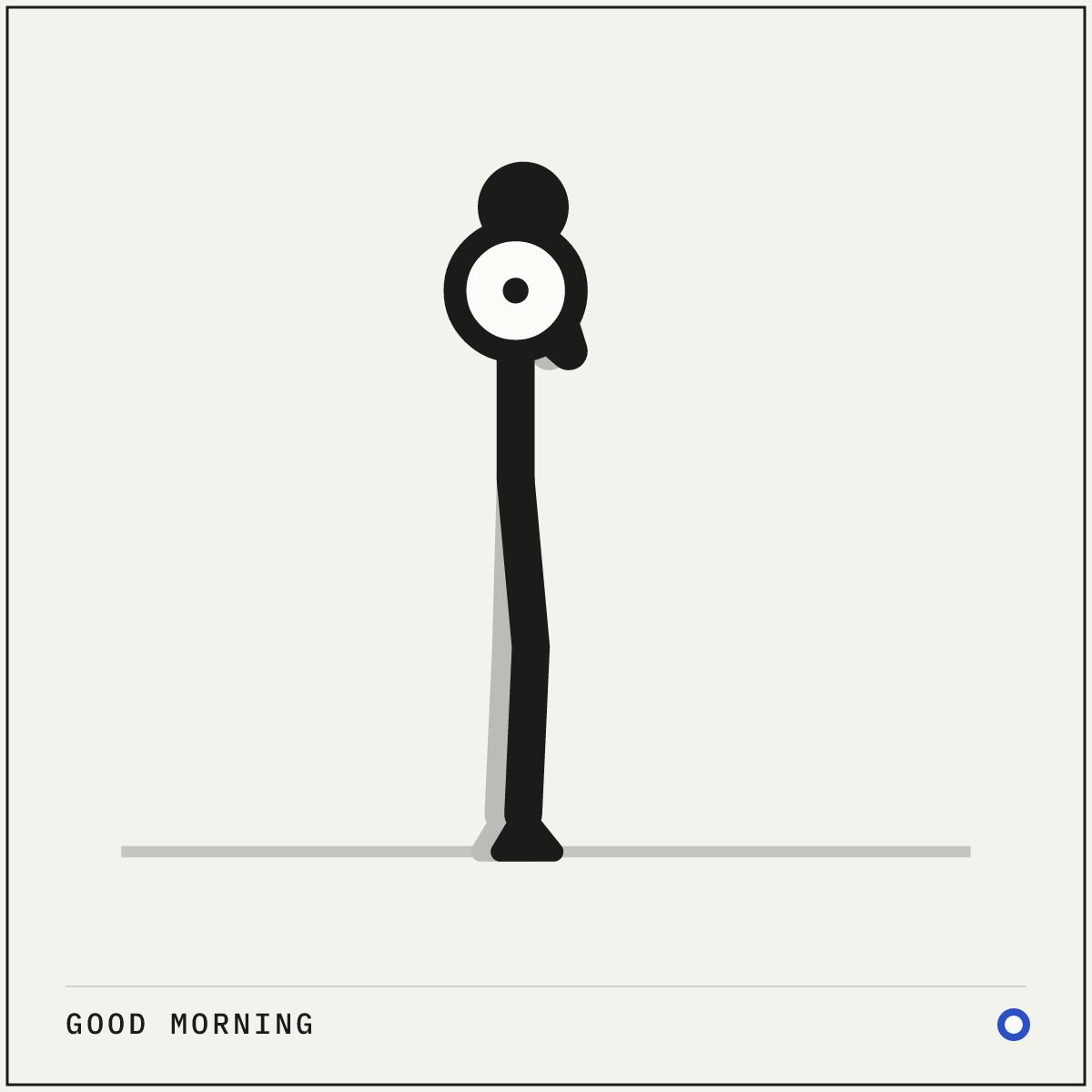
2 stages
Stand tall
01 Stand tall
Bar set on the upper back, knees softly bent, trunk braced.
02 Hinge
Hips travel straight back while the bar stays pinned to the shoulders.
How to do it
Setup
- Set the bar across your upper back as you would for a back squat, hands gripping outside your shoulders.
- Stand with your feet hip-width apart and a slight bend in your knees.
- Pull the bar down into your back so it cannot slide, and brace your trunk.
Execution
- Push your hips straight back and let your torso tip forward, keeping the knee bend fixed.
- Lower until your torso approaches horizontal or your hamstrings stop you, whichever comes first.
- Drive your hips forward to stand tall without the bar bouncing off your back.
BreathingBig breath at the top, hold it through the rep, breathe at the top.
Cues and mistakes
Check every rep
- Hips travel back, the bar only comes along for the ride.
- Keep your whole back long from tailbone to neck.
What goes wrong
- Bowing forward from the spine instead of folding at the hips.
- Letting the knees drift forward, which quietly turns it into a squat.
- Loading it like a squat. The lever is long and the weight must be modest.
Safety
- Start with the empty bar and add weight in the smallest steps you have. The bar sits far from your hips, so every kilo counts double compared with a deadlift.
General guidance, not medical advice. See how Setkit works.
Notes
The good morning is a Romanian deadlift with the bar moved from your hands to your shoulders. Because the load now sits at the top of the lever instead of hanging below your hips, the hamstrings, glutes and every muscle along your spine work far harder per kilo than in any other hinge. Fifty kilos here does what a hundred does elsewhere.
That leverage is the reason to do it and the reason to respect it. The exercise builds the exact strength that holds your back flat in deadlifts, rows and squats, and it finds weakness there faster than anything else in the library. It also punishes a rounded back faster than anything else, which is why the weight stays modest and the reps stay crisp.
Program it light and controlled, in the 8–12 range, after your main lift rather than instead of it. If you feel it mostly in your lower back, the weight is too heavy or the hips are not going back far enough. Drop the load, slow it down, and push your hips back until the hamstrings take over.