Dumbbell Romanian deadlift
The hip hinge under load. Hamstrings and glutes stretched and strengthened through their full range.
TrainsHamstringsGlutes
NeedsDumbbell
The movement
2 stages
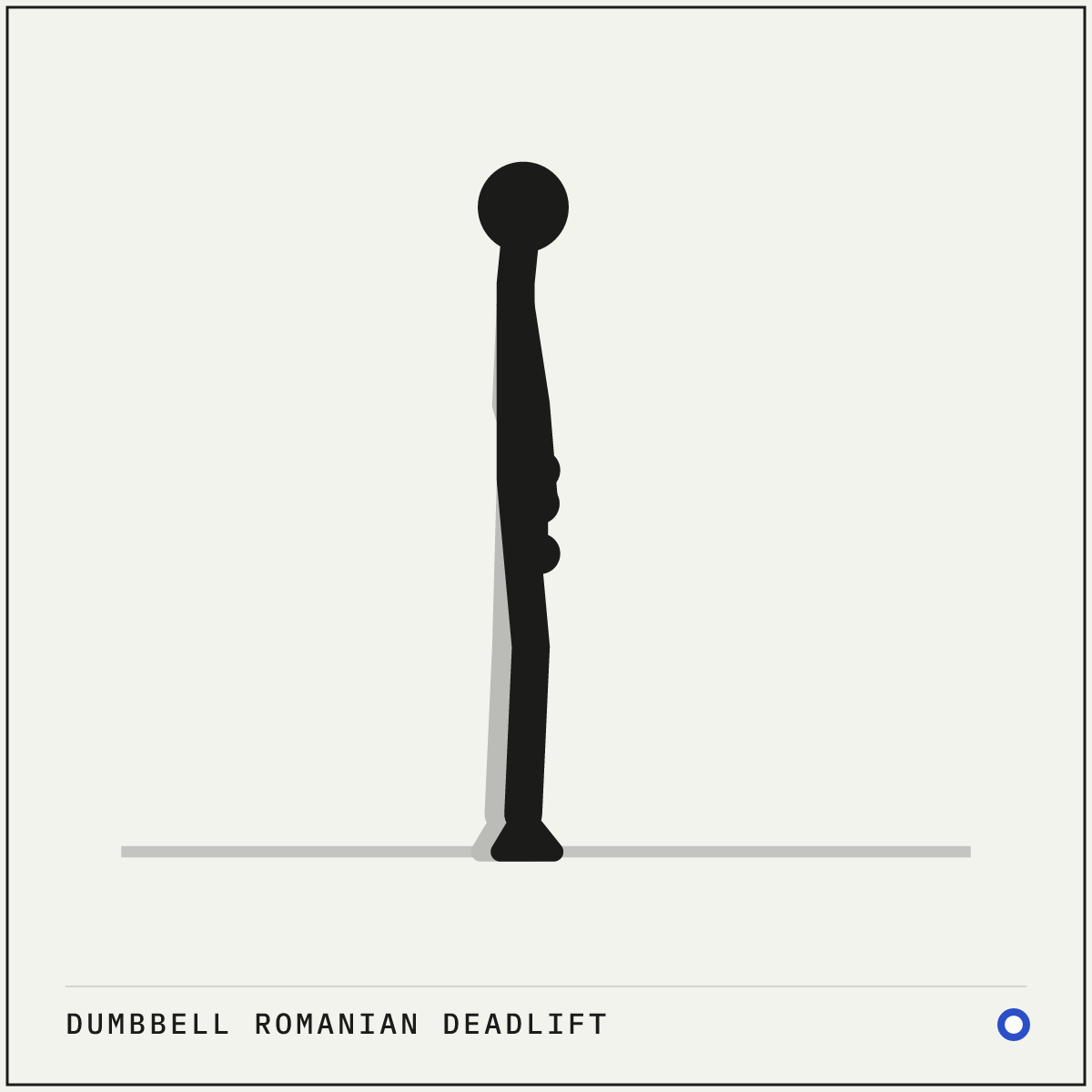
Stand tall
01 Stand tall
Weights resting on the front of the thighs, shoulders back.
02 Hinge
Push the hips back; weights slide down the legs to mid-shin.
How to do it
Setup
- Stand tall holding a dumbbell against the front of each thigh.
- Set your feet hip-width apart with your knees slightly bent, and keep that bend.
- Pull your shoulder blades back and down.
Execution
- Push your hips straight back and let your torso tip forward, sliding the weights down your thighs.
- Go down until you feel a firm stretch in your hamstrings, usually somewhere around mid-shin.
- Drive your hips forward to stand tall, squeezing your glutes at the top.
BreathingInhale as your hips travel back, exhale as you drive up.
Cues and mistakes
Check every rep
- Push your hips backward rather than down, and feel your weight in your heels.
- Keep the dumbbells brushing your legs the whole way.
- Hold the same long back from start to finish.
What goes wrong
- Bending your knees more as you go down, which turns it into a shallow squat.
- Rounding your back to reach a depth you picked in advance.
- Letting the weights drift forward away from your legs.
Safety
- Your hamstring flexibility sets the range, not the floor. Stop where your back would start to round.
General guidance, not medical advice. See how Setkit works.
Notes
The Romanian deadlift is the hip hinge in its clearest form. Your knees stay where they are, your hips travel back, and your hamstrings lengthen under load until they cannot lengthen any further. It builds the whole back of your body, and it teaches the exact pattern that kettlebell swings, deadlifts and picking things up safely all depend on.
Let the stretch set your depth. When your hamstrings tighten firmly, that is as far as you go today. Forcing the weights lower by rounding your back trades hamstring work for a sore back. For most people the range ends somewhere around the shins, and it improves with practice.
Dumbbells are the best tool for learning this. They hang naturally at your sides, and there is very little balancing to do. Move to the barbell version when your grip or the dumbbells you own stop being enough.