Frog pump
A glute bridge with the soles of your feet together and your knees dropped out wide. The position takes the hamstrings out and leaves the glutes to do the lifting.
TrainsGlutes
NeedsBodyweight
The movement
2 stages
Set
01 Set
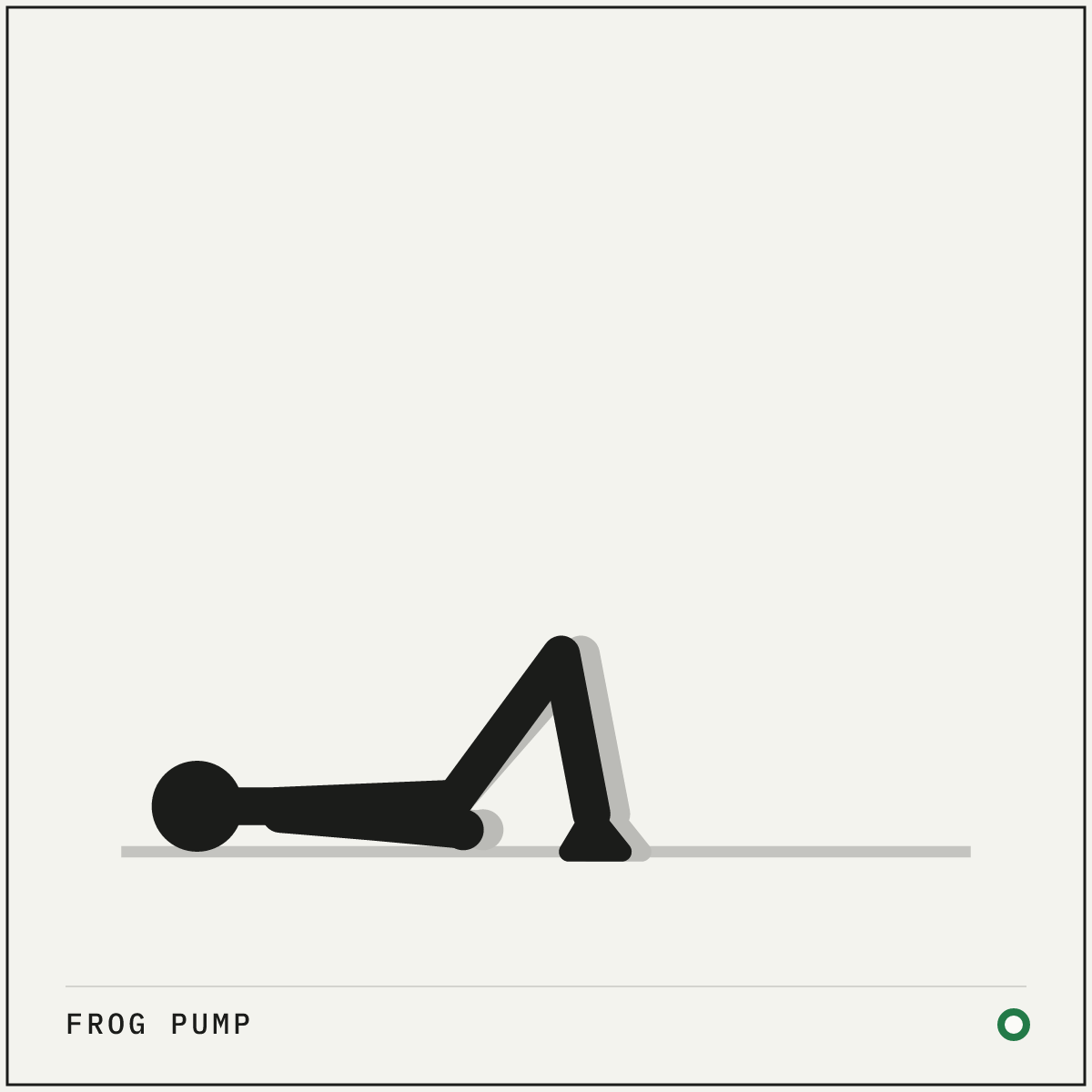
On your back, soles together and knees dropped out, heels pulled in near your hips.
02 Squeeze
Press through the outside of your feet and squeeze the glutes where the hips stop rising.
How to do it
Setup
- Lie on your back with your knees bent and put the soles of your feet together.
- Let your knees fall out to the sides and slide your heels in toward your hips until you feel a stretch inside your thighs.
- Rest your arms on the floor beside you and tuck your ribs down.
Execution
- Press through the outside edges of your feet and lift your hips off the floor.
- Squeeze your glutes hard at the top, where your hips stop rising.
- Lower until your hips just touch the floor, then start the next rep without resting there.
BreathingBreathe out as your hips rise, in as they lower.
Cues and mistakes
Check every rep
- Knees stay out to the sides for every rep.
- Stop lifting when your hips stop moving, not when your back arches.
What goes wrong
- Letting the knees drift back together, which brings the hamstrings back in and cancels the point of the position.
- Arching the lower back to add height once the hips have stopped rising.
- Resting on the floor between reps, which is where most of the tension is lost.
Safety
- The range is short and the glutes fatigue fast, so the temptation is to arch the back for extra height. If your lower back is doing the last inch, the set is over.
General guidance, not medical advice. See how Setkit works.
Notes
The frog pump is a glute bridge with the legs rotated open, and the foot position is the entire reason it exists. With your feet flat and close together, your hamstrings help lift the hips and often cramp before the glutes are tired. Turning the knees out and pressing through the outside of your feet shortens the hamstrings, which leaves them little to contribute and hands the work to the glutes.
Expect a short range and a lot of reps. Your hips travel a few inches, the top position is where all the tension is, and the muscle responds to time spent squeezing rather than to distance covered. Sets of fifteen to thirty are normal, and pausing for a second at the top is worth more than adding reps at the bottom.
Progressing this without weights means changing the tempo rather than the load. Pause at the top, lower over three seconds, or stop just short of the floor so the glutes never get a rest. Once those stop being difficult, move to loaded work. A glute bridge with a weight across your hips and the hip thrust both offer real load, and this becomes a finisher after them.
It also works as a way to find your glutes when they are not firing. If your lower back or hamstrings take over during bridges and hip thrusts, run a set of frog pumps first. In this position there is almost nothing else available to do the job, so the right muscle becomes obvious.