Single-leg glute bridge
The glute bridge on one leg. Double the load on the working side, and a clear test of left-to-right balance.
TrainsGlutes
NeedsBodyweight
The movement
2 stages
Set
01 Set
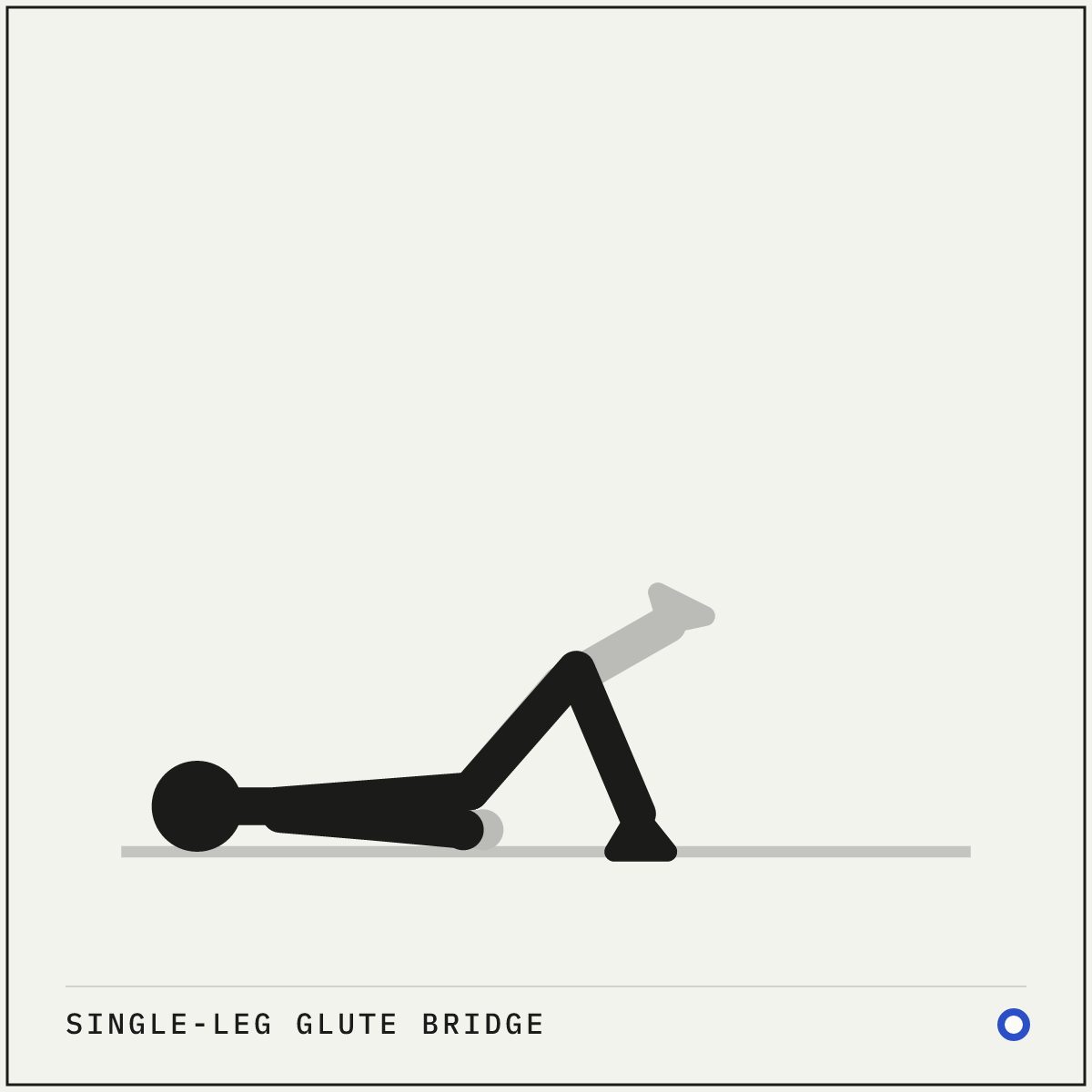
One foot planted, the other leg held straight and raised.
02 Bridge
Push through the planted heel; hips stay level as they rise.
How to do it
Setup
- Set up as you would for a glute bridge, then straighten one leg so both thighs stay level with each other.
- Press the planted foot into the floor before you lift.
Execution
- Drive your hips up through the planted heel until your body forms a straight line.
- Keep your pelvis level, with neither hip dropping or turning.
- Lower under control, and finish all your reps before switching sides.
Cues and mistakes
Check every rep
- The planted leg does all the work; the raised leg only stays where it is.
- Squeeze at the top exactly as you would with both feet down.
What goes wrong
- Letting the free-leg side of your pelvis sag or twist.
- Cutting the range short as the working side gets tired.
Safety
- If your pelvis will not stay level, go back to two-leg bridges with a pause at the top. The strength comes quickly.
General guidance, not medical advice. See how Setkit works.
Notes
Taking one foot off the floor doubles the load on the working glute and removes everywhere to hide. Most people find a stronger and a weaker side within two reps. That is worth knowing, because a difference that stays invisible with two legs down tends to show up eventually when you are standing on one.
Keeping the pelvis level is the whole exercise. A bridge that twists with one hip dropping is training a twist rather than hip extension. Reps only count while your hips stay square, and when they cannot, the set is finished.
This is also the usual gate to the hip thrust. Ten strict single-leg bridges per side means you are ready to start loading the pattern properly.