Suspension pike push-up
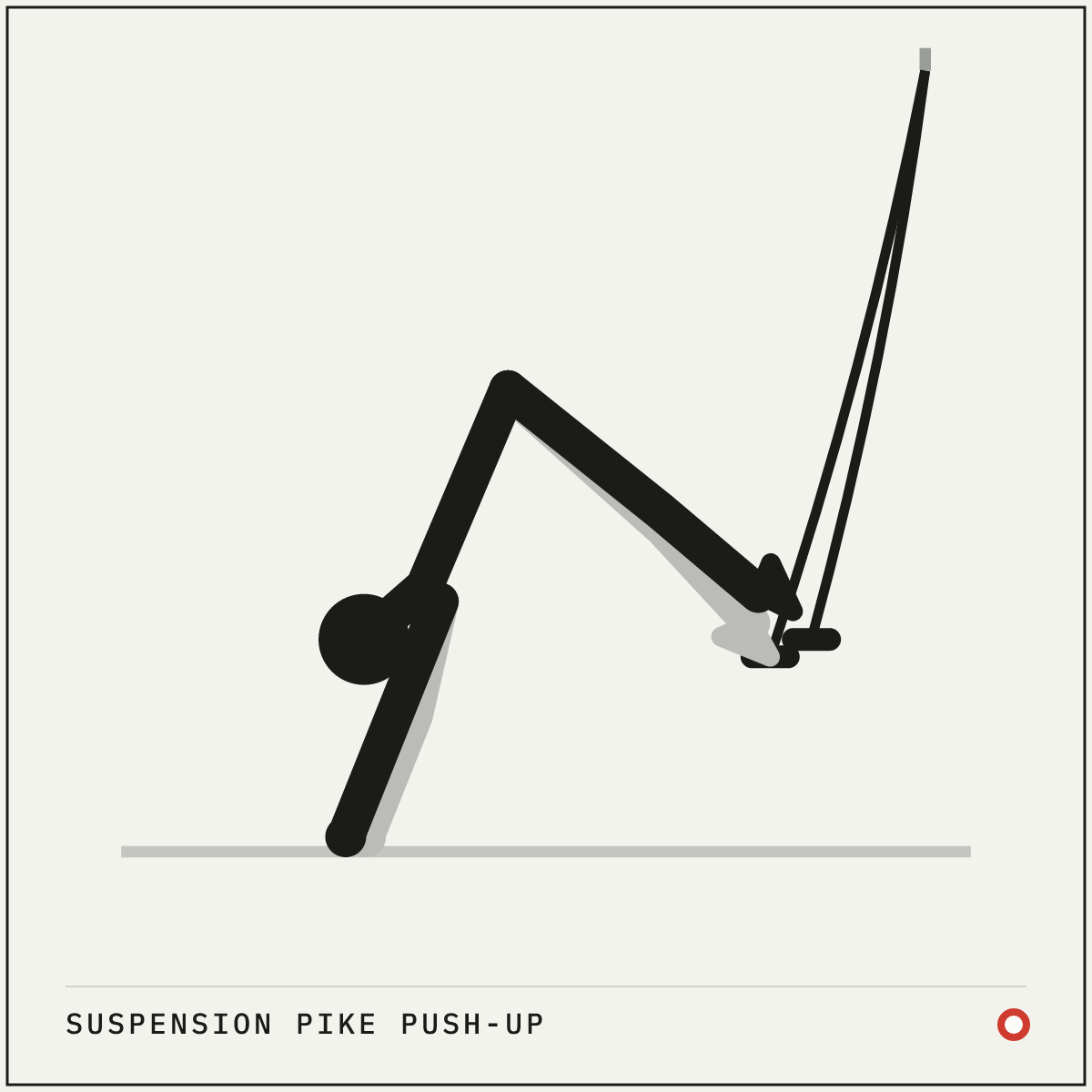
A vertical pressing movement where your feet are suspended in the trainer and you press your body up into an inverted V-shape.
TrainsShoulders
NeedsSuspension trainer
The movement
2 stages
Top
01 Top
Feet in the straps, hips high in an inverted V.
02 Bottom
Lower the crown of your head toward the floor, keeping the hips high.
How to do it
Setup
- Adjust the suspension trainer straps so the cradles hang about a foot off the floor.
- Get into a high plank position and place your feet into the cradles.
Execution
- Keep your arms straight and pike your hips up toward the ceiling until your torso is nearly vertical.
- Bend your elbows to lower the top of your head toward the floor between your hands.
- Press the floor away aggressively to return to the top of the pike.
BreathingInhale as you lower your head, exhale as you press back up.
Cues and mistakes
Check every rep
- Keep your core incredibly tight; don't let your hips sag at the bottom of the movement.
- Look at your toes as you press to keep your neck neutral.
What goes wrong
- Flaring the elbows straight out to the sides. Keep them tucked at about a 45-degree angle.
- Losing core tension and allowing the back to hyperextend.
Safety
- Ensure you can perform standard pike push-ups and have solid core control in the suspension trainer before attempting this.
General guidance, not medical advice. See how Setkit works.
Notes
The suspension pike push-up combines the vertical pressing demands of a standard pike push-up with the extreme core stability required by the suspension trainer. By elevating your feet and removing their fixed anchor to the floor, your shoulders and triceps must work overtime while your core fires constantly to maintain the pike position.
This is a fantastic stepping stone toward the handstand push-up for those who lack a wall or want to build more dynamic shoulder stability. Because your feet are elevated, a greater percentage of your bodyweight is shifted onto your hands compared to a floor pike push-up.