Band chest fly
A standing fly against band tension. Isolates the chest with a resistance that peaks at the top of the squeeze.
TrainsChest
NeedsResistance band
The movement
2 stages
Wide arc
01 Wide arc
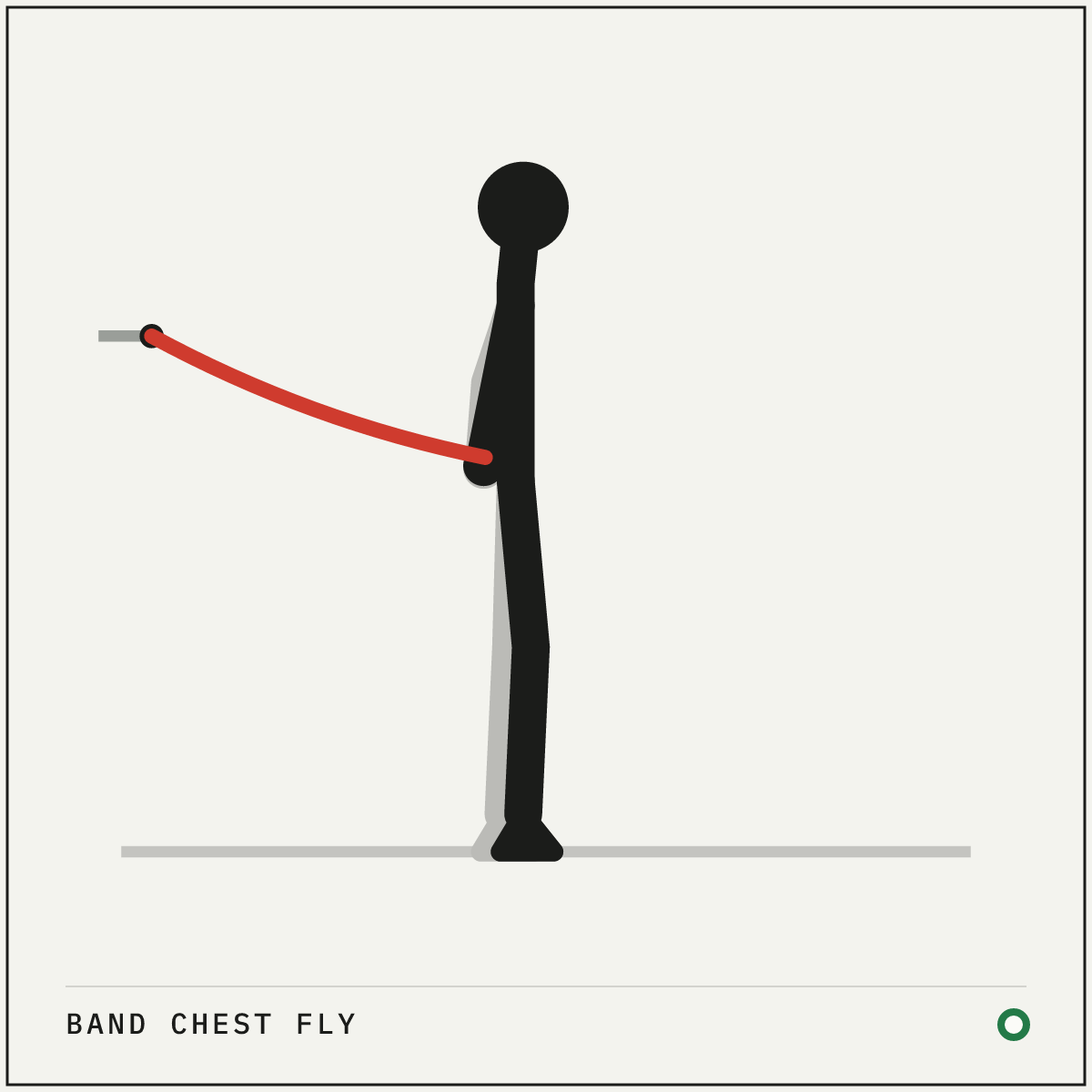
Step forward until the band is tight with your arms out to the sides.
02 Hands together
Bring your hands together in a wide arc, squeezing your chest.
How to do it
Setup
- Anchor a band behind you at chest height.
- Take a handle in each hand and step forward until the band is tight with your arms out to the sides.
- Set a slight bend in your elbows and lock that angle.
Execution
- Bring your hands together in a wide arc in front of your chest.
- Squeeze your chest hard when your hands meet.
- Return slowly along the same arc until you feel a stretch.
BreathingInhale as your arms open, exhale as you bring them together.
Cues and mistakes
Check every rep
- Keep the slight elbow bend locked the entire time.
- Lead the arc with your upper arms.
What goes wrong
- Bending your elbows as you press, which turns the fly into a chest press.
- Letting the band snap your arms back, losing tension on the return.
Safety
- Check the band for tears, and ensure the anchor is secure. A failure under tension releases the band toward you.
General guidance, not medical advice. See how Setkit works.
Notes
The band fly isolates the chest exactly like a dumbbell fly does, but the resistance profile is reversed. Where a dumbbell is heaviest at the bottom of the stretch and lightest at the top, a band pulls hardest when your hands are together.
That changes how you use it. Instead of focusing on the deep stretch, focus on the squeeze at the front. The band makes the top of the rep the hardest part, forcing your chest to work where a free weight would let it rest.
Like any fly, the elbow angle is the whole trick. If your elbows bend as your hands come back and straighten as they go forward, you are doing a standing chest press. Lock a slight bend before you start and make your shoulders do all the moving.