Band chest press
A standing press against band tension. Horizontal pressing anywhere you can anchor a band.
TrainsChest
NeedsResistance band
The movement
2 stages
Set
01 Set
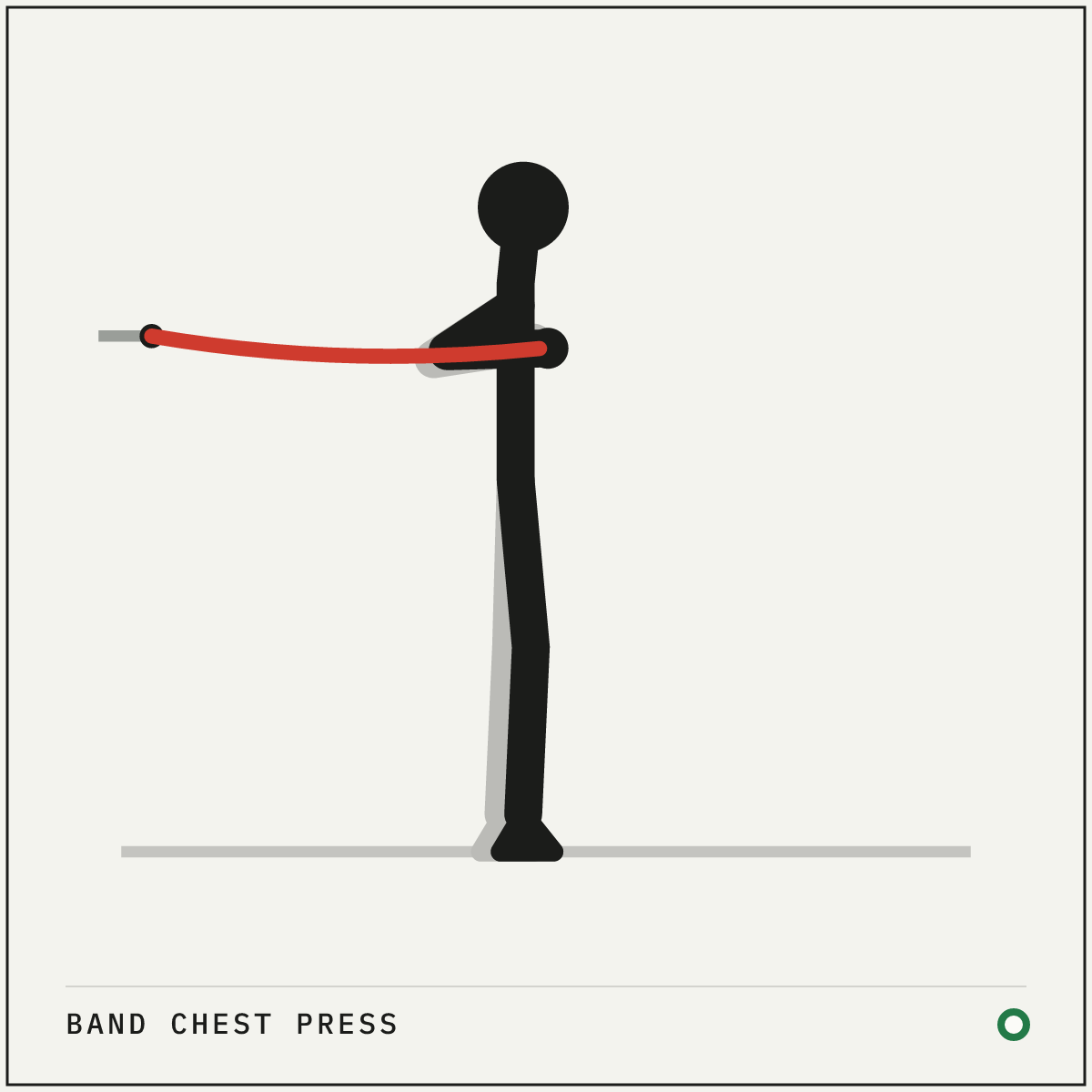
Band anchored behind you at chest height; hands at the chest.
02 Press
Press straight ahead to full extension; control the return.
How to do it
Setup
- Anchor the band behind you at chest height, on a door anchor or a sturdy post.
- Hold a handle in each hand at chest level and step forward until the band is tight.
- Put one foot slightly ahead of the other for balance.
Execution
- Press both hands straight forward until your arms are fully extended.
- Squeeze your chest at full reach, then return under control.
- Keep your trunk tight, because the band will try to twist you and pull you back.
Cues and mistakes
Check every rep
- Take three seconds on the return, every rep.
- Stand tall and square, without leaning your weight into the press.
What goes wrong
- Standing so close to the anchor that the first half of each rep has no tension.
- Letting the band snap your arms back instead of resisting on the way in.
Safety
- Check bands for nicks and tears regularly, and anchor them to something that cannot move.
General guidance, not medical advice. See how Setkit works.
Notes
The band chest press is what upper-body training looks like when you are travelling. A door anchor, a loop band, and a press that gets harder the further you push. Because a band pulls hardest when it is stretched furthest, this exercise loads the end of the movement, which is the part a dumbbell lets you coast through.
It is quietly a trunk exercise as well. Pressing while standing means every rep tries to twist you and tip you backwards, and refusing that pull is the same work a Pallof press does. You get it free alongside the pressing.
Two things set the difficulty: how thick the band is, and how far forward you stand. A thicker band or a longer step makes the press heavier. When bands stop being challenging, the same pattern carries on into push-ups and dumbbell presses.