Barbell floor press
A bench press from the floor. The ground stops your elbows short of a full stretch, so it needs no bench, no rack and no spotter.
The movement
2 stages
Bottom
01 Bottom
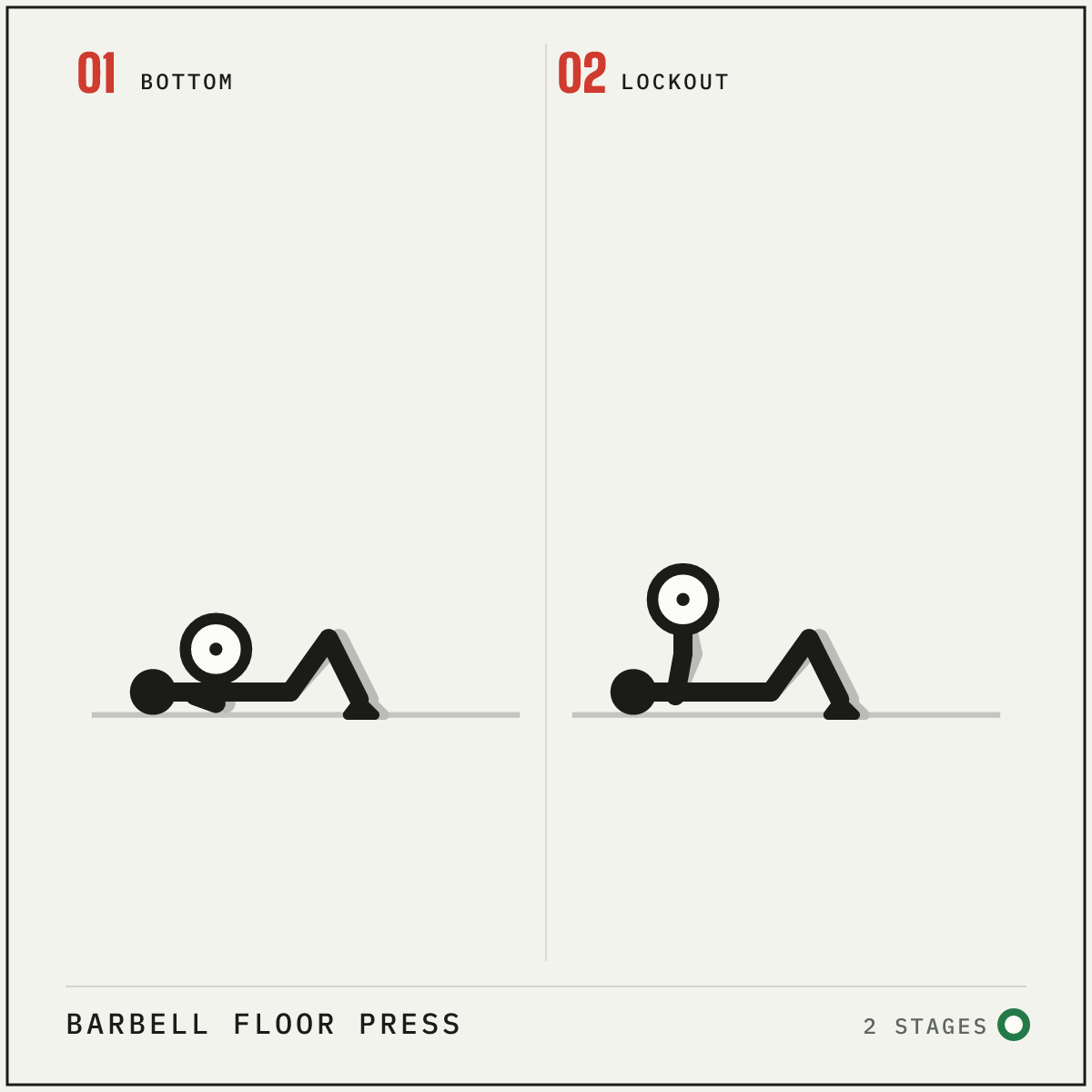
Upper arms rest on the floor, forearms vertical, the bar held still over the chest.
02 Lockout
Press the bar to straight arms above the shoulders.
How to do it
Setup
- Load the bar with full-size plates so it sits clear of the floor, and lie on your back with your head under the bar.
- Slide under until the bar is over your lower chest, then bend your knees and set your feet flat, or leave your legs straight if your lower back prefers it.
- Take an overhand grip a little wider than your shoulders and press the bar up until your arms are straight.
Execution
- Lower the bar under control until your upper arms settle onto the floor, forearms vertical.
- Pause there for a full second with the bar held still.
- Press the bar back up to straight arms above your shoulders.
- Lock out each rep before the next one begins.
BreathingInhale as the bar comes down, exhale as you press.
Cues and mistakes
Check every rep
- Upper arms about 45° from your body, forearms vertical.
- Place the elbows on the floor rather than dropping them.
- Press from a dead stop on each rep.
What goes wrong
- Bouncing the elbows off the floor to get the bar moving.
- Arching the lower back and lifting the hips to finish the press.
- Flaring the elbows wide, which puts the shoulders under strain.
Safety
- The bar can trap you if a rep fails. Stop a set with a rep to spare, and if the bar stalls, lower it to your chest, roll it down to your hips and sit up. Leaving the collars off lets you tip plates off if you have to.
General guidance, not medical advice. See how Setkit works.
Notes
The floor press is the oldest form of the bench press and still the simplest. There is no bench to buy and no rack to set up. You load the bar on the floor, lie down under it, and press. The floor stops your upper arms a few centimeters short of a full bench-press stretch, which protects the shoulders and shifts more of the work to the triceps and the middle of the chest’s range.
The pause on the floor is what you are paying for. With the elbows resting, the stretch that normally helps you out of the bottom is gone, and every rep starts from nothing. That builds pressing strength that carries straight over to the bench, and it makes a modest bar feel heavy. Keep the pause real, a full second with the bar still, and treat any bounce as a missed rep.
It is also the safest way to press a bar alone. A failed rep ends with the bar on your chest, from where you roll it down to your hips and sit up, so there is no need for a spotter. For a home setup with a bar and plates but no bench, this is the chest press that fills the slot a bench press would.