Kettlebell floor press
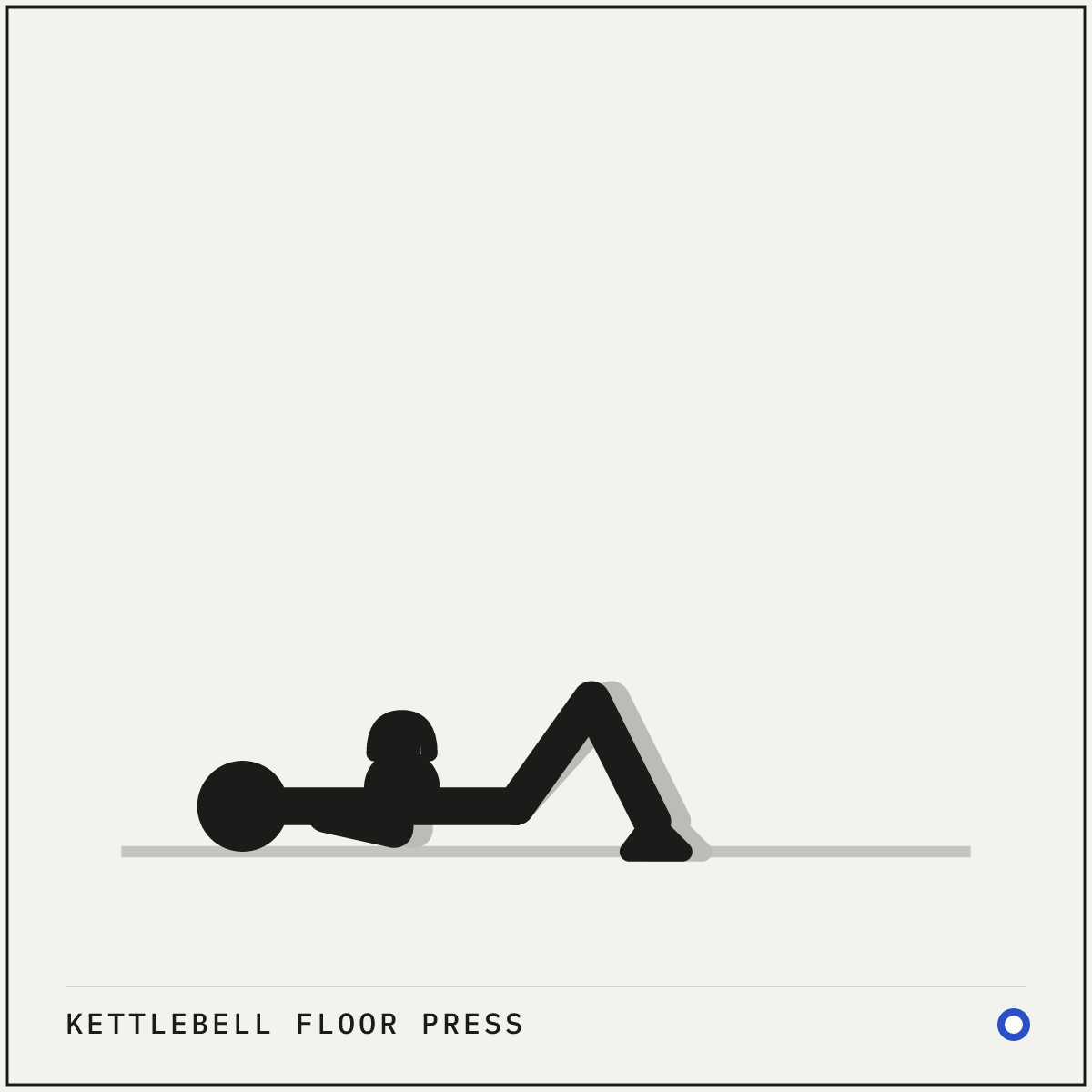
A floor press with kettlebells racked at the shoulders. The floor shortens the range and the bells add a wrist you have to keep straight.
NeedsKettlebell
The movement
2 stages
Bottom
01 Bottom
Upper arms rest on the floor, wrists straight under the bells.
02 Lockout
Press both bells to straight arms above the shoulders.
How to do it
Setup
- Lie on your back with your knees bent and feet flat, and pull a kettlebell to each shoulder so it rests against the back of your forearm.
- Let your upper arms settle on the floor with your forearms vertical and your wrists straight under the bells.
Execution
- Press both bells up until your arms are straight above your shoulders.
- Lower under control until your upper arms rest back on the floor.
- Pause there for a moment, then press again from a complete stop.
BreathingExhale as you press, inhale as your arms settle back down.
Cues and mistakes
Check every rep
- Keep your wrists straight so each bell stacks over your forearm.
- Pause on the floor, then press from a dead stop.
What goes wrong
- Letting the wrists bend back, which lets the bells roll off the forearms.
- Arching the lower back to help the bells up.
Safety
- If a bell starts to tip sideways, let it roll off your forearm to the floor rather than fighting to save the rep. The floor sits only a few centimeters below your shoulder, so there is nowhere for an elbow to drop wrong.
General guidance, not medical advice. See how Setkit works.
Notes
The kettlebell floor press does the same job as the dumbbell version. Lying on the ground stops your upper arms early, which shortens the range and keeps the shoulders out of trouble. The chest and triceps still load hard through the part of the lift they finish.
What changes is the grip. A kettlebell hangs off the back of your forearm instead of sitting balanced in your palm, so your wrist has to stay straight through the whole set or the bell tips. That single difference makes an otherwise beginner press worth treating as intermediate work, and it is why the same weight feels harder here than it does in a dumbbell.
The floor also makes this a safe place to test that wrist position under real load. If a bell starts to roll, it rolls onto the floor next to you rather than onto your chest, so you can press near your limit without a spotter.