Band plyo push-up
An explosive push-up with a band looped across your back, resisting the press hardest at the top. Loaded and explosive at the same time.
TrainsChest
NeedsResistance band
The movement
3 stages
Bottom
01 Bottom
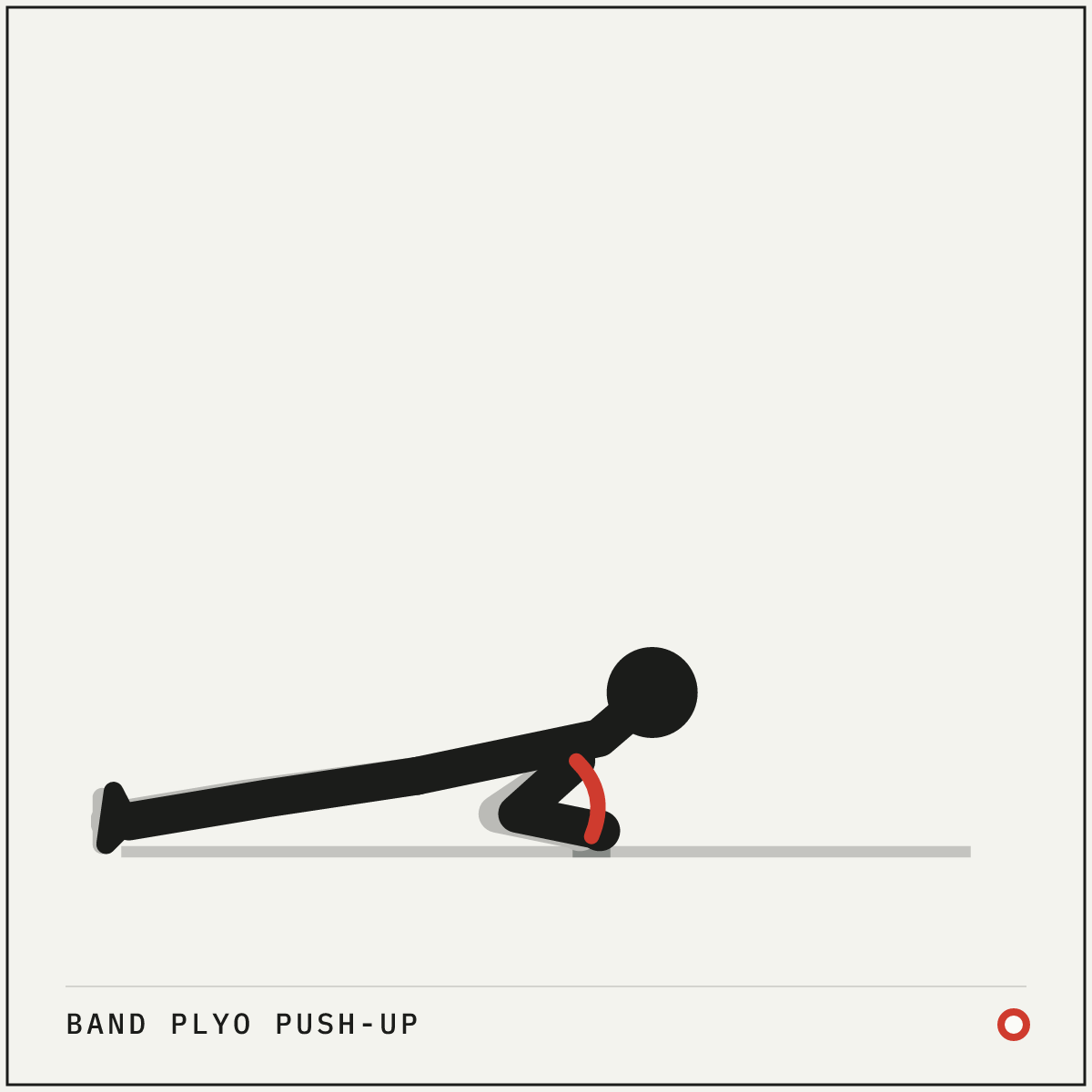
Chest just above the floor, band already tight across the back.
02 Drive
Press to straight arms, fighting the band the whole way.
03 Hands clear the floor
Press hard enough that the hands leave the ground, then land soft and go straight into the next rep.
How to do it
Setup
- Loop a resistance band across your upper back and pin one end under each hand on the floor, slightly wider than shoulder width.
- Set up in a push-up position with your body in one straight line from head to heels.
Execution
- Lower under control until your chest is just above the floor.
- Press explosively enough that your hands leave the floor against the band's pull.
- Land with soft elbows and go straight into the next rep.
BreathingExhale hard through the press, inhale as you reset at the bottom.
Cues and mistakes
Check every rep
- Land quiet. A loud slap means you are landing stiff-armed.
- Keep the same straight body line in the air that you hold on the floor.
What goes wrong
- Pressing just hard enough to finish the rep, which skips the explosive intent the band is there to load.
- Letting the hips sag or pike in the air, the same failure as a strict push-up, just airborne.
- Landing with locked elbows, which sends the impact into the wrists and shoulders instead of absorbing it.
Safety
- Check the band for nicks before every session. A band that snaps mid-rep, while your hands are in the air, removes your landing resistance without warning.
General guidance, not medical advice. See how Setkit works.
Notes
Most banded pressing work trades speed for tension, holding a slow, controlled press against resistance. This does the opposite. The band is there specifically so you can press as hard and as fast as a normal push-up allows, with enough resistance that pressing explosively is the only way to finish the rep at all.
The band’s resistance profile matches what an explosive push-up needs. It is loosest at the bottom, where your arms are just starting to extend, and pulls hardest right as your hands are about to leave the floor, exactly the part of the rep that decides whether you get airborne or not.
Landing is not an afterthought here. Absorb the impact through slightly bent elbows and shoulders the same way you would catch a jump through bent knees. Locking the arms out to meet the floor sends the force straight into the wrist and the shoulder joint instead of into the muscles built to handle it.
This sits at the top of the push-up family for a reason. It asks for the strength of a strict push-up, the control of a diamond push-up, and a rate of force production neither of those trains on its own. Earn a clean set of strict push-ups before adding the band and the jump.