Dumbbell calf raise
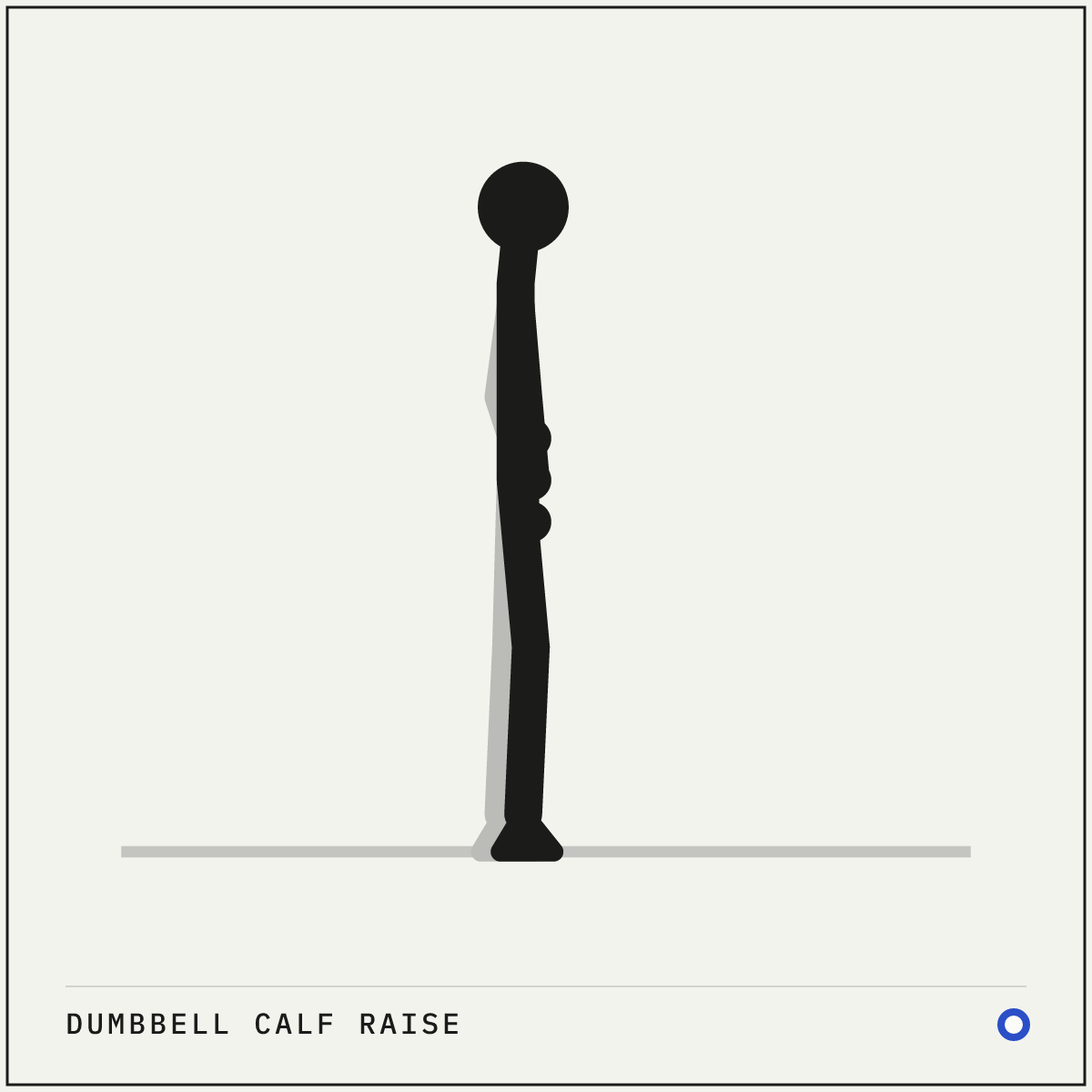
A loaded standing calf raise using dumbbells. A simple way to overload the calves without a rack.
The movement
2 stages
Flat
01 Flat
Stand tall with dumbbells hanging straight at your sides.
02 Raise
Rise as high as possible, holding the top position for a full second.
How to do it
Setup
- Stand tall holding a dumbbell in each hand, arms hanging straight down at your sides.
- Set your feet shoulder-width apart.
Execution
- Rise as high onto the balls of your feet as possible.
- Pause for a distinct second at the top.
- Lower slowly until your heels are flat on the floor again.
BreathingExhale as you rise, inhale as you lower your heels.
Cues and mistakes
Check every rep
- Press straight up, avoiding the urge to roll your weight onto the outside of your feet.
- Squeeze the calves hard at the very top of the rep.
- Let the arms hang dead; do not shrug the shoulders to lift the weights.
What goes wrong
- Rushing the reps and bouncing off the floor.
- Not reaching full height on the toe press.
Safety
- If you lose your balance, simply step forward or drop the dumbbells.
General guidance, not medical advice. See how Setkit works.
Notes
The dumbbell calf raise is the natural next step when high-rep bodyweight raises stop being challenging. It adds meaningful resistance without requiring a barbell or a specialized gym machine, making it a perfect fit for home workouts.
Like all calf training, form matters more than the weight in your hands. A light dumbbell moved through a full, slow range of motion with a hard pause at the top is far more effective than a heavy dumbbell bounced up and down. The calves are strong, stubborn muscles that need strict tension to adapt.
To increase the difficulty without using heavier weights, stand with the balls of your feet on a sturdy, slightly elevated surface like a heavy plate. This lets your heels drop below the toes, providing a deep stretch at the bottom of every rep. If you do this, ensure you have a wall nearby to help with balance.