Kettlebell rear delt fly
A bent-over fly with a light kettlebell in each hand. Direct work for the back of the shoulder, using the bells you already own.
TrainsShoulders
NeedsKettlebell
The movement
2 stages
Hinged, arms hanging
01 Hinged, arms hanging
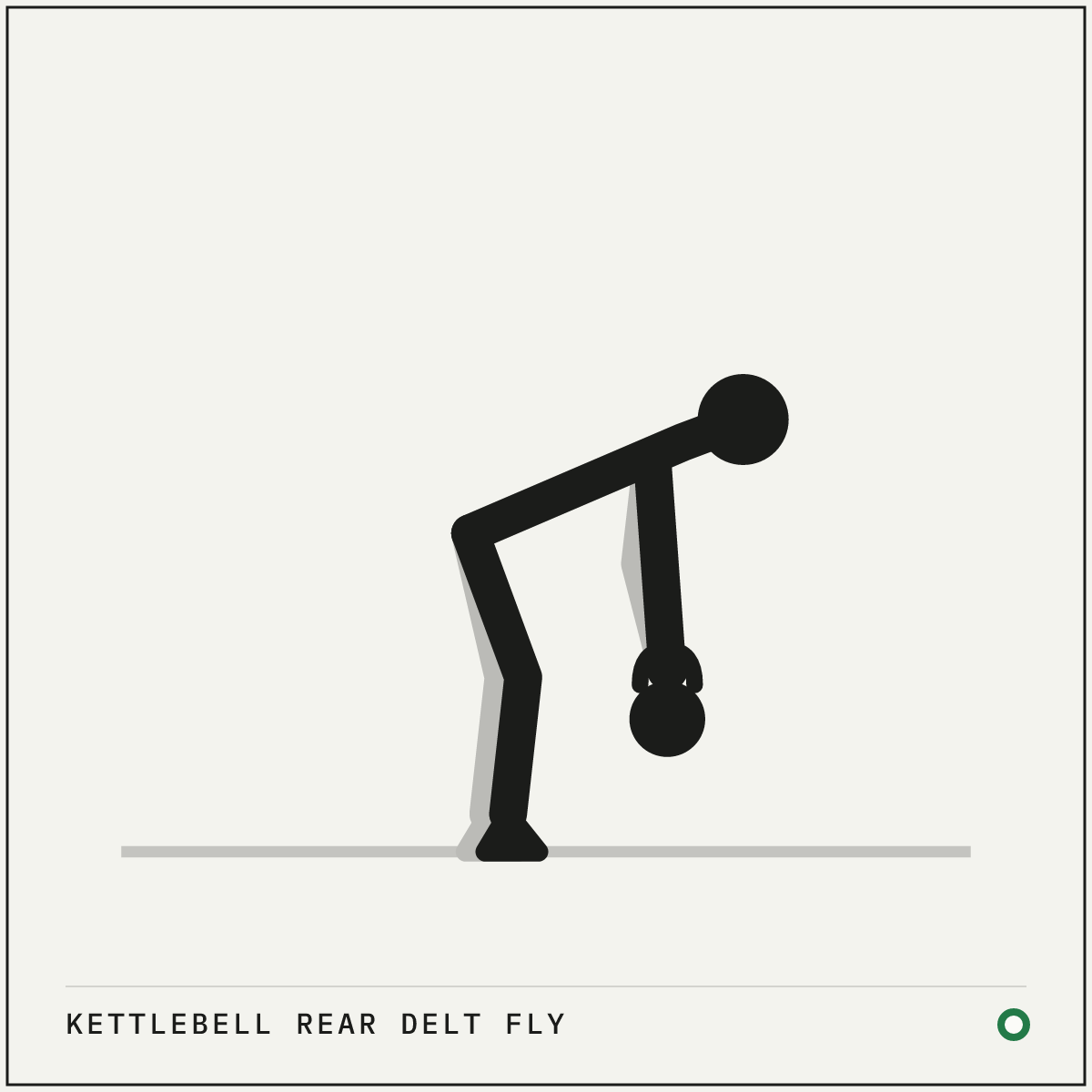
Fold forward to near parallel with the floor and let both bells hang under your shoulders.
02 Level with the shoulders
Sweep the arms out to shoulder height and hold the top for a second.
How to do it
Setup
- Hold the lightest kettlebell you own in each hand, with the handle across your palm and the bell hanging outside your wrist.
- Fold forward at the hips until your torso is close to parallel with the floor, knees slightly bent.
- Let both arms hang under your shoulders with a small bend at the elbow, and keep your back flat.
Execution
- Sweep both arms out to the sides until they are level with your shoulders.
- Hold the top for a second with the bells behind the line of your body.
- Lower slowly back under your shoulders while your torso stays where it is.
BreathingBreathe out as your arms rise, in as they lower.
Cues and mistakes
Check every rep
- Wrists stay straight so the bells cannot roll your hands forward.
- Your torso holds still and only your arms move.
What goes wrong
- Turning the fly into a row by bending the elbows once the shoulders tire.
- Letting the bells swing forward at the bottom, which starts the next rep with momentum.
- Standing up a few degrees each rep, which shortens the range without feeling like it.
Safety
- Kettlebells rest against the back of your wrist here, so a bell that is too heavy bends the wrist back before the shoulder is loaded. If your grip has to fight the handle, the weight is wrong for this exercise.
General guidance, not medical advice. See how Setkit works.
Notes
The back of the shoulder gets very little work from pressing and only some from rowing, where the much larger muscles of the back take over. A rear delt fly is the direct fix, and a pair of kettlebells does the job as long as you accept how light they need to be.
The handle is the difference from a dumbbell. A kettlebell hangs from your fist rather than sitting inside it. The weight rides on the outside of your wrist and pulls your hand into a bent position at the bottom of every rep. Keeping the wrist straight is the whole skill here, and it is also the limit. A bell heavy enough to test your grip is far too heavy for the muscle you came to train.
Twelve to twenty reps with the lightest bells in the house is the prescription. The rear delt is a small muscle at the end of a long lever, so the load that trains it is embarrassing next to what you row with. If your torso rocks up to start each rep, you are rowing, and the rear delt has already stopped being the limit.
If your bells all start at sixteen kilos, this is the wrong tool. Band pull-aparts and face pulls load the same muscle in grams rather than kilos, and a chest-supported fly with light dumbbells takes your lower back out of the equation entirely.