Chest-supported rear delt fly
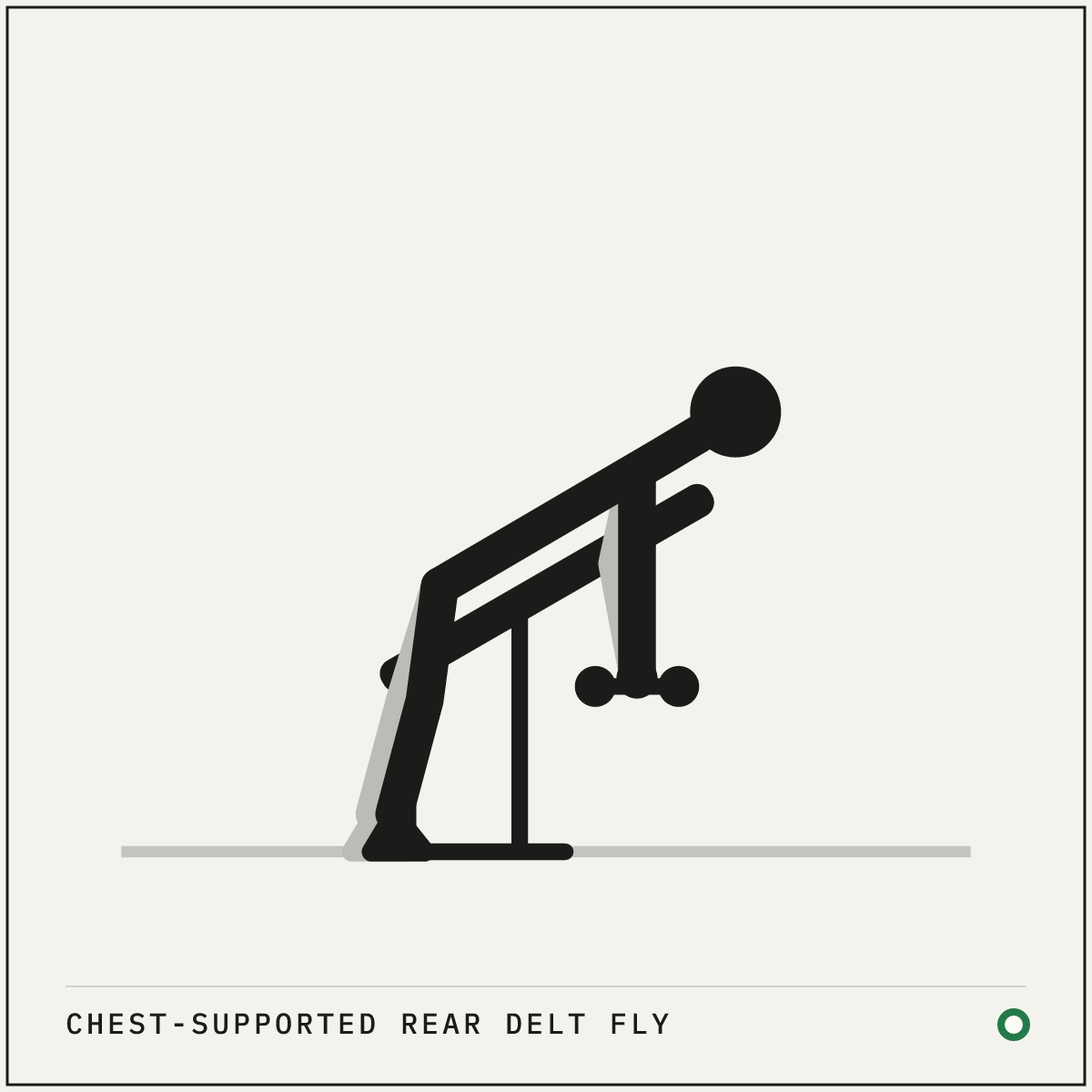
A rear delt fly done face down on an incline bench. The same work as the bent-over version with no way to cheat.
The movement
2 stages
Arms hanging
01 Arms hanging
Chest flat on the pad, arms hanging straight down under the shoulders with a slight elbow bend.
02 Level with the shoulders
Sweep the arms out until they are level with the shoulders, elbows leading the hands.
How to do it
Setup
- Set a bench to a low incline and lie face down with your chest on the pad.
- Hold a light dumbbell in each hand hanging straight down, palms facing each other.
- Bend your elbows slightly and keep your head in line with your spine.
Execution
- Raise both arms out to the sides in a wide arc until they are level with your shoulders.
- Pause at the top with your elbows leading your hands.
- Lower slowly back under your shoulders without your chest leaving the pad.
BreathingExhale as your arms rise, inhale as they lower.
Cues and mistakes
Check every rep
- Lead with your elbows and let your hands trail.
- Stop the arc at shoulder height, not above it.
What goes wrong
- Bending your elbows further as the set goes on, which makes the weight easier and hides fatigue.
- Pulling your shoulder blades hard together, which moves the work to your mid-back.
- Pushing your chest off the pad to start each rep, which is the swing this version exists to prevent.
Safety
- There is almost nothing here for your lower back to do, so your shoulder is the limit. Keep the weights light enough that your arms stop at shoulder height rather than swinging past it.
General guidance, not medical advice. See how Setkit works.
Notes
The back of the shoulder is small, your arms are long, and the correct weight for a rear delt fly is light. That combination makes the bent-over version awkward, because holding a flat back for twenty slow reps is real work, and when it gives out your torso starts rising with each rep and the fly quietly turns into a row. Putting your chest on a pad removes that problem.
What is left is a cleaner exercise than the standing version can be. Your trunk does nothing, your hips cannot help, and the only way to move the dumbbells is to rotate your arms around your shoulders. Most people find the right weight here is lighter still than what they were using bent over, which tells you something about the bent-over version rather than about this one.
Set the bench low. A shallow incline leaves your arms hanging roughly under your shoulders, which is where the arc has its full range. Steeper than about 45° and the pad starts blocking the top of the movement. The same bench angle that suits a chest-supported row works here.
Keep the elbow angle fixed and the reps between twelve and twenty. If your elbow closes during the rep, your lats have taken over. Nearly straight arms make that cheat impossible, which is worth more than the extra weight a bent arm would allow.