Kettlebell Z-press
A kettlebell overhead press done sitting on the floor with your legs straight out in front. No leg drive and no back support.
TrainsShoulders
NeedsKettlebell
The movement
2 stages
Sitting tall
01 Sitting tall
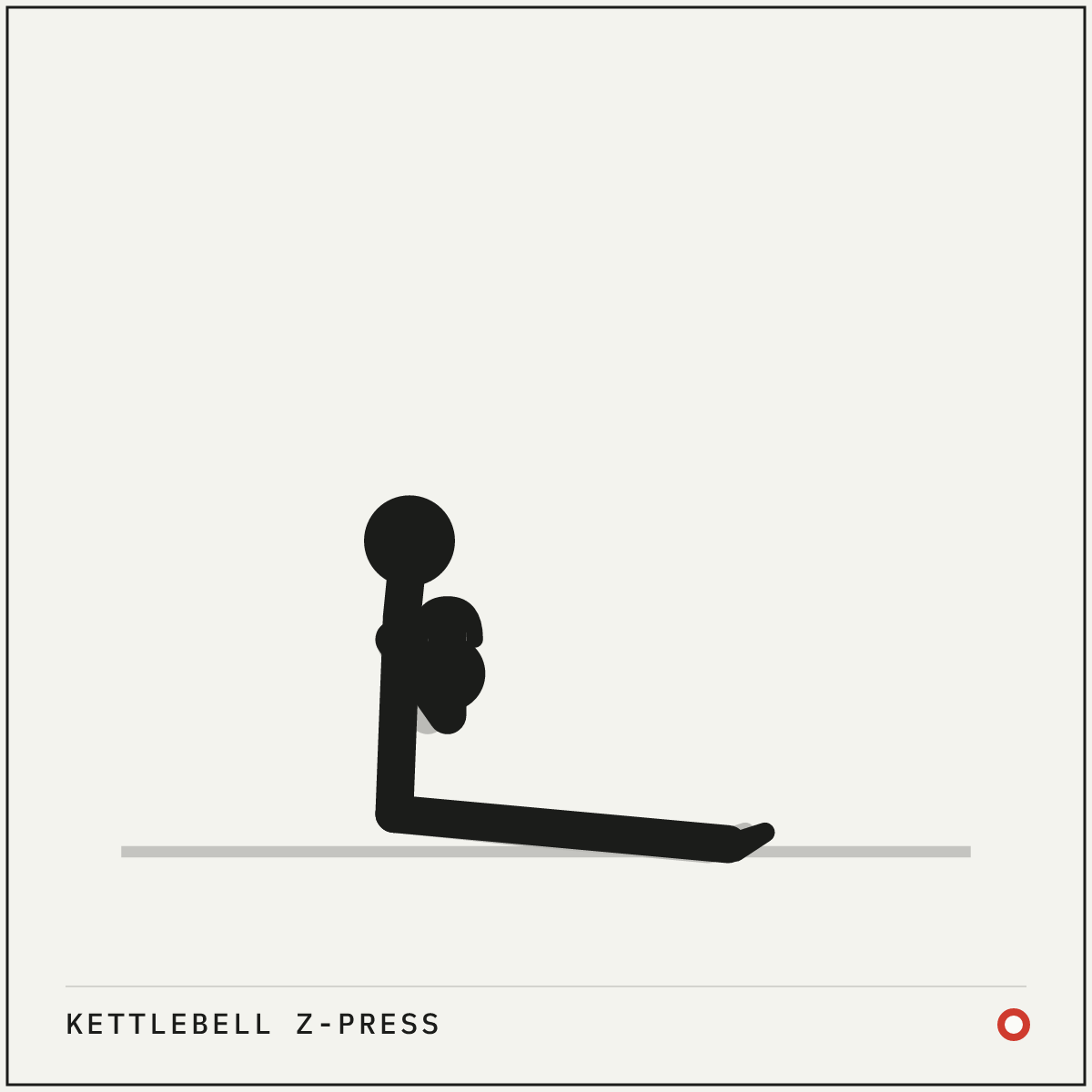
Sit tall on the floor, legs straight out, bells resting on your forearms.
02 Lockout
Press straight up to locked elbows without letting your lower back round behind you.
How to do it
Setup
- Sit on the floor with your legs straight out in front and spread into a wide V.
- Sit tall with a flat back and a kettlebell racked on the back of each forearm.
- Brace your trunk and press your heels into the floor.
Execution
- Press both bells straight up until your elbows are locked.
- Pause for a moment with the bells stacked over your shoulders.
- Lower them under control back onto your forearms.
- Sit at the same height at the end of the set as at the start.
BreathingInhale at your shoulders, exhale as you press.
Cues and mistakes
Check every rep
- Sit as tall as you can and hold it between reps.
- Keep the wrists straight so the bells sit on the forearm.
- Push your heels down to anchor your hips.
What goes wrong
- Leaning back to start the bells moving, which turns the press into an incline press.
- Letting the lower back round, which drops the ribs and takes the shoulders out of position.
Safety
- Sitting upright with straight legs asks a lot of the hamstrings and hips. If you cannot get there with a flat back, press seated on a bench instead until you can.
General guidance, not medical advice. See how Setkit works.
Notes
Sitting flat on the floor takes the legs out of an overhead press. There is no dip, no drive and no bench behind you, so nothing helps the weight up and nothing hides a weak position. Whatever your shoulders can do on their own is what the set looks like.
Kettlebells add a second problem on top. The bells rest against the back of your forearms and pull outward and backward, so your shoulders hold them in place through the whole rep rather than only pushing them up. That is useful work, and it is also why the load you use here will look small next to a standing press.
Hip and hamstring range decides whether you can do this at all. Sitting with straight legs and a flat back is the exercise, not a detail of it, and without that range your lower back rounds to make up the difference. Sit on the floor against a wall to find out where you are, and keep pressing on a bench until the position is there.