Leaning single-arm lateral raise
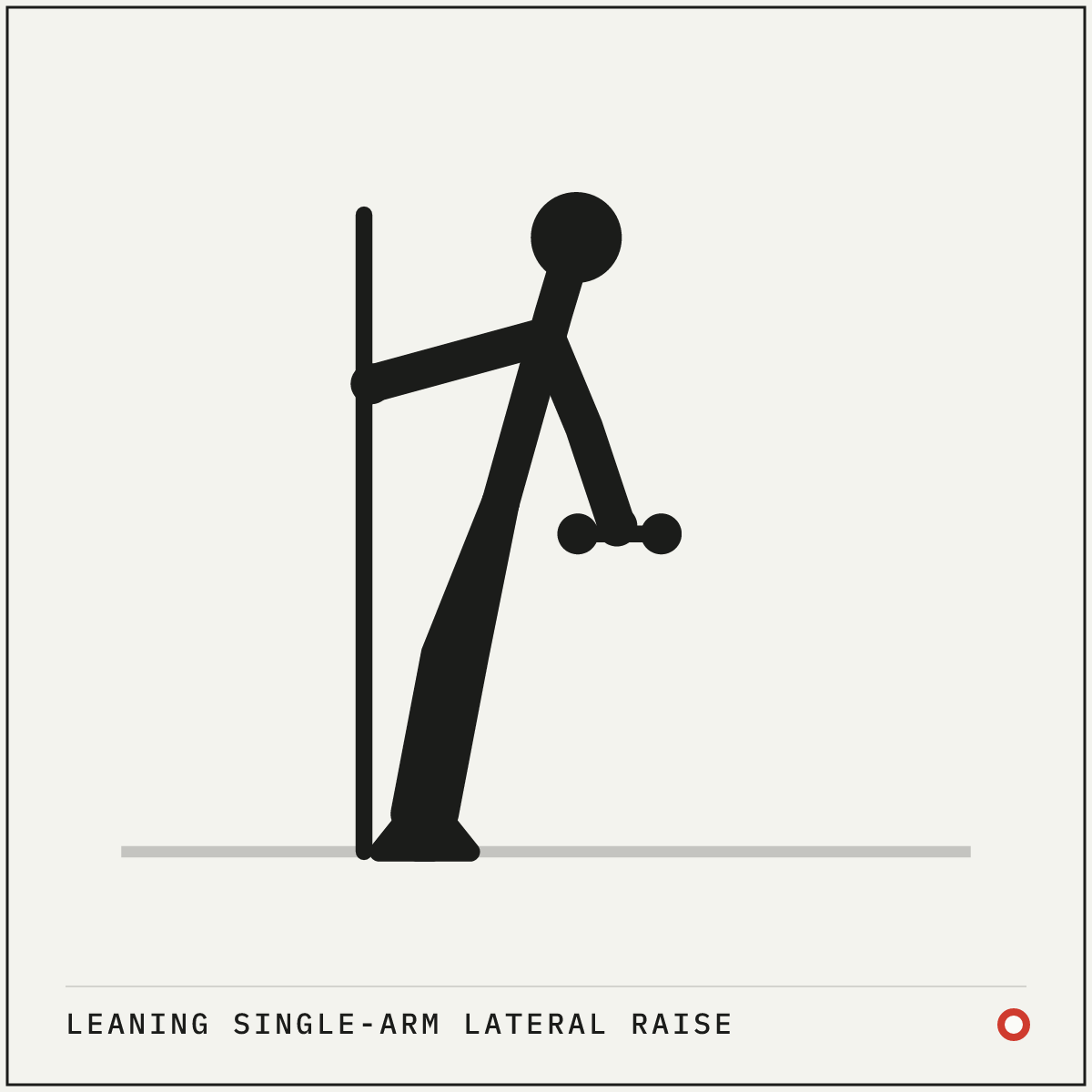
A lateral raise done holding a fixed post and leaning away from it. The lean loads the side of the shoulder from the very first inch of the rep.
The movement
2 stages
Arm down
01 Arm down
Grip the post with a straight arm and lean away from it, body in one straight line.
02 Raise
Raise the weight out to the side to shoulder height, keeping the body straight.
How to do it
Setup
- Stand side-on to a fixed post, rack upright, or doorframe, and grip it at about shoulder height with your inside hand.
- Hold a dumbbell in your outside hand and walk your feet in toward the base of the post.
- Lean your whole body away from the post until your gripping arm is straight, holding one straight line from your feet to your head.
Execution
- Raise the dumbbell out to the side until your arm reaches shoulder height.
- Lead with your elbow, with your little finger tilted slightly upward.
- Lower on a slow, deliberate count without letting your body swing back upright.
BreathingExhale as you raise, inhale as you lower.
Cues and mistakes
Check every rep
- Let the gripping arm stay straight, so the post holds your lean for you.
- Keep one straight line from your feet to your head for the whole set.
What goes wrong
- Standing upright next to the post instead of leaning away from it, which turns this back into a normal lateral raise holding a rail.
- Bending sideways at the waist rather than leaning the whole body, which loads the spine instead of the shoulder.
- Shrugging the working shoulder toward the ear as the weight gets heavy.
Safety
- Choose a post or upright that will not move. A support that shifts under your weight takes your balance with it mid-set.
General guidance, not medical advice. See how Setkit works.
Notes
A standard lateral raise gives the side of the shoulder almost nothing to do for the first part of the rep. With your arm hanging against your thigh, the dumbbell sits directly under the joint, and real tension only arrives once the arm has already travelled some way out. Leaning away from a post fixes that. The working arm starts hanging clear of your body, so the shoulder is loaded from the very first inch.
The lean also lengthens the range. Your arm has further to travel to reach shoulder height, and because you are anchored to the post you cannot shorten that trip by swaying your torso. Both effects point the same way, which is more time under tension for a muscle that responds to exactly that.
This is the advanced end of an exercise family that is already light by design. Do not chase weight here. The post exists to make strict form possible at a weight that would otherwise tempt you to swing, not to let you handle more than a standard lateral raise would.
Pick the support carefully. A doorframe, a squat rack upright or anything else bolted down works. Anything that can slide or tip turns a shoulder exercise into a balance problem.