Dumbbell front raise
A straight-arm raise to shoulder height. Direct work for the front of the shoulder, and the raise most people need least.
The movement
2 stages
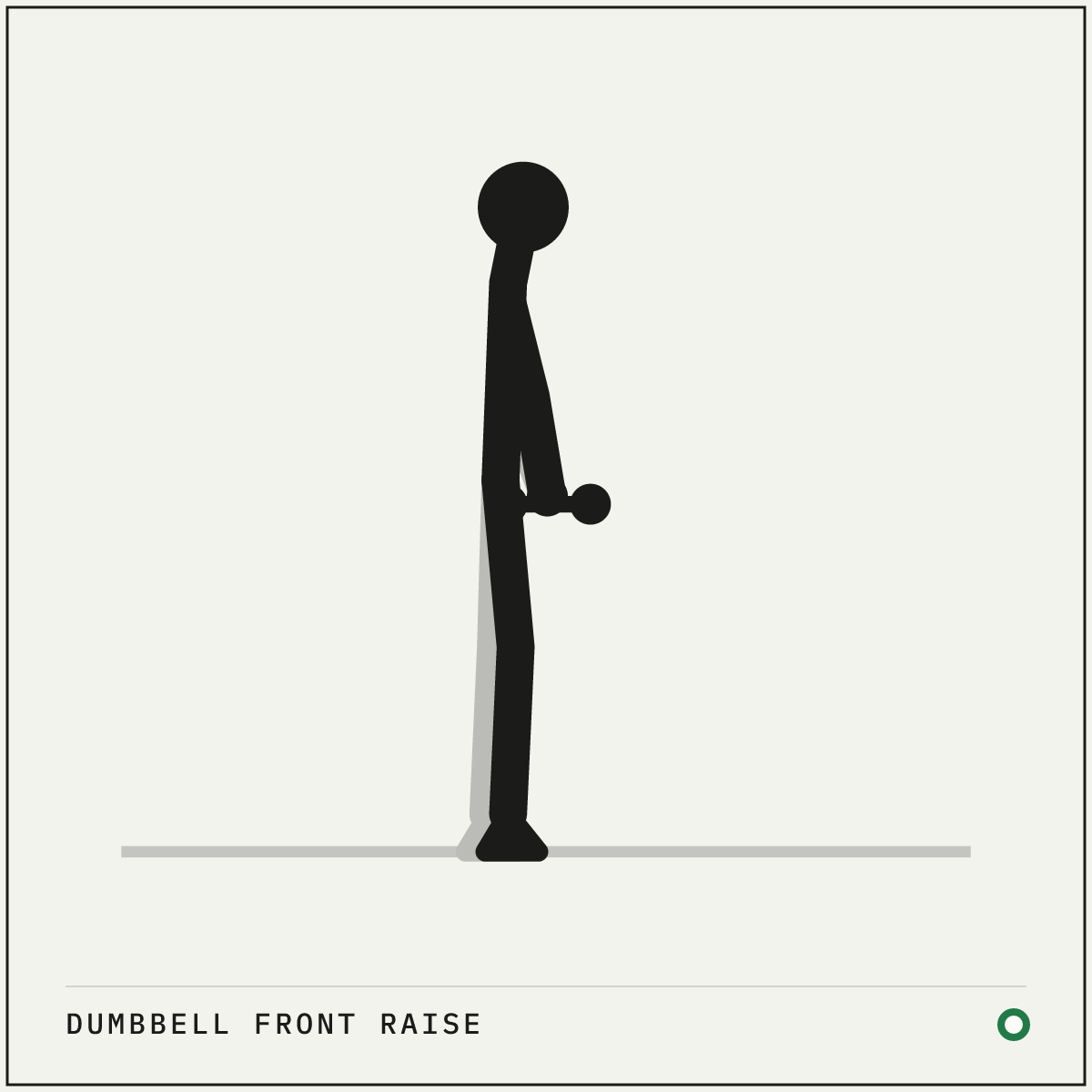
Weights at the thighs
01 Weights at the thighs
Stand tall, brace the trunk, dumbbells resting against the front of the thighs.
02 Level with the shoulder
Raise straight arms to shoulder height and stop there.
How to do it
Setup
- Stand tall with a dumbbell in each hand resting against the front of your thighs, palms facing you.
- Tighten your trunk and squeeze your glutes so your torso cannot swing.
Execution
- Raise both arms straight ahead until your hands are at shoulder height.
- Pause briefly with your arms level and your elbows almost straight.
- Lower slowly back to your thighs without resting the weights there.
BreathingExhale as your arms rise, inhale on the way down.
Cues and mistakes
Check every rep
- Only your shoulders move; your torso stays still.
- Stop at eye level.
What goes wrong
- Rocking backward to launch the weights, which loads your lower back rather than your shoulder.
- Bending your elbows partway through to make the weight easier to lift.
- Raising past shoulder height, where the traps take over and the front of the shoulder stops working.
Safety
- Your lower back pays for a weight that is too heavy here. If you have to lean back to start the rep, the dumbbells are too big.
General guidance, not medical advice. See how Setkit works.
Notes
The front raise is the most over-prescribed shoulder exercise in any gym, and knowing that is most of what makes it useful. The front of your shoulder already works in every push-up, every bench press and every overhead press, so for most people it is the best-trained third of the shoulder before any direct work is added.
That makes this a targeted tool rather than a staple. It earns its place when you are not pressing much, in a program built mostly around pulling, or during a stretch when a sore wrist or elbow rules pressing out. It also helps when the front of your shoulder is behind the side and rear. Added on top of a program that already presses three times a week, it mostly adds fatigue.
The detail worth getting right is where to stop. Shoulder height is the end of the front deltoid’s range. Above that your shoulder blade rotates and your traps take the load, which is why raises finishing overhead feel easier through the top. Stopping level keeps the tension where you aimed it.
Raising one arm at a time makes your trunk work harder against the twist, and it usually reveals a side that is doing less. Either version wants light weights and strict reps. This is not a movement that rewards load.