Kettlebell front raise
Both hands on the horns of one kettlebell, raised with straight arms to shoulder height. Direct work for the front of the shoulder.
TrainsShoulders
NeedsKettlebell
The movement
2 stages
Bell in front of the thighs
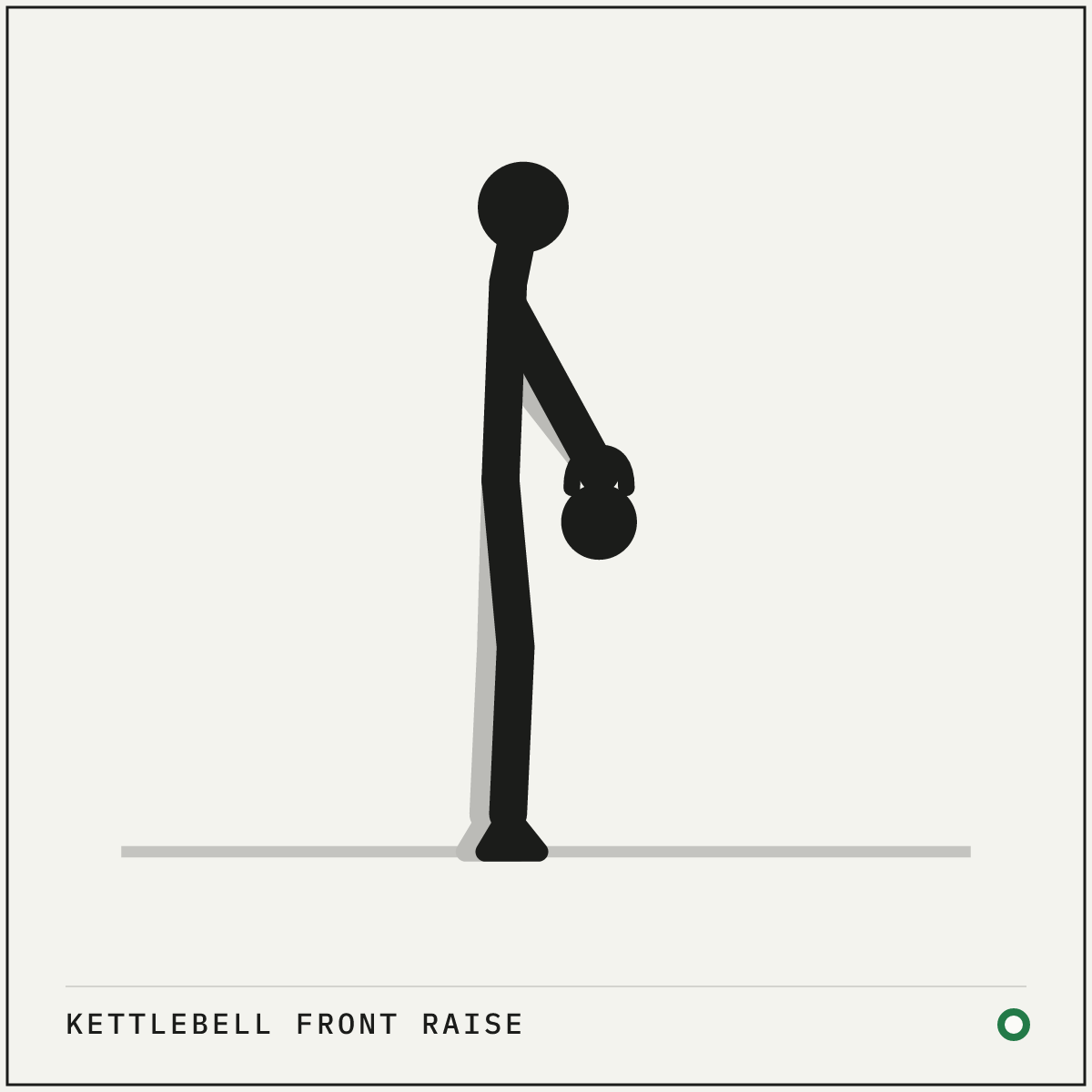
01 Bell in front of the thighs
Stand tall with both hands on the horns and the bell hanging in front of the thighs.
02 Level with the shoulder
Raise the bell forward with straight arms and stop at shoulder height.
How to do it
Setup
- Hold one kettlebell by the horns with both hands, so the bell hangs below your hands.
- Stand with your feet under your hips and let the bell rest against the front of your thighs.
- Pull your ribs down so your lower back stays flat.
Execution
- Raise the kettlebell forward with straight arms.
- Stop when your hands reach shoulder height.
- Lower it back to your thighs under control.
BreathingExhale as you raise the bell, inhale as you lower it.
Cues and mistakes
Check every rep
- Arms stay straight. The bell travels in an arc, not a curl.
- Ribs stay down, so the weight does not pull you into a backward lean.
What goes wrong
- Rocking the hips to throw the bell up, which removes the shoulders from the exercise.
- Raising past shoulder height, where the traps take over.
- Bending the elbows as the set gets hard, which shortens the lever and the work.
Safety
- Two hands on one bell means a slip drops it straight onto your feet. Grip the horns rather than the handle top, and set the bell down between sets instead of holding it at your thighs.
General guidance, not medical advice. See how Setkit works.
Notes
The front delt sits at the top of your shoulder and lifts your arm forward. Every press trains it, which is why a front raise is an accessory rather than a main lift. It earns its place when your pressing is limited by something else, or when you want the front of the shoulder worked without loading your elbows and triceps again.
Holding one kettlebell in two hands changes the exercise for the better. The bell hangs below your grip, so the weight sits further from your hands than a dumbbell does and the lever is longer. A light bell feels heavier than its number suggests, and both arms share one load, which stops one side from drifting higher than the other.
Straight arms are what make this a shoulder exercise. Bending the elbows brings the weight closer to you and cuts the work at the shoulder, and it is the first thing that happens when the bell gets heavy. Pick a weight you can keep your arms locked out with for every rep in the set.
Stop at shoulder height. Above that your shoulder blade has to rotate to let the arm keep travelling, and the traps do that work rather than the delts. If you want the range above shoulder height, an overhead press trains it properly under load.