Suspension T-raise
A lean-back raise where your arms finish out to the sides. Direct work for the upper back and the rear of the shoulders.
TrainsUpper back
NeedsSuspension trainer
The movement
2 stages
Straps taut
01 Straps taut
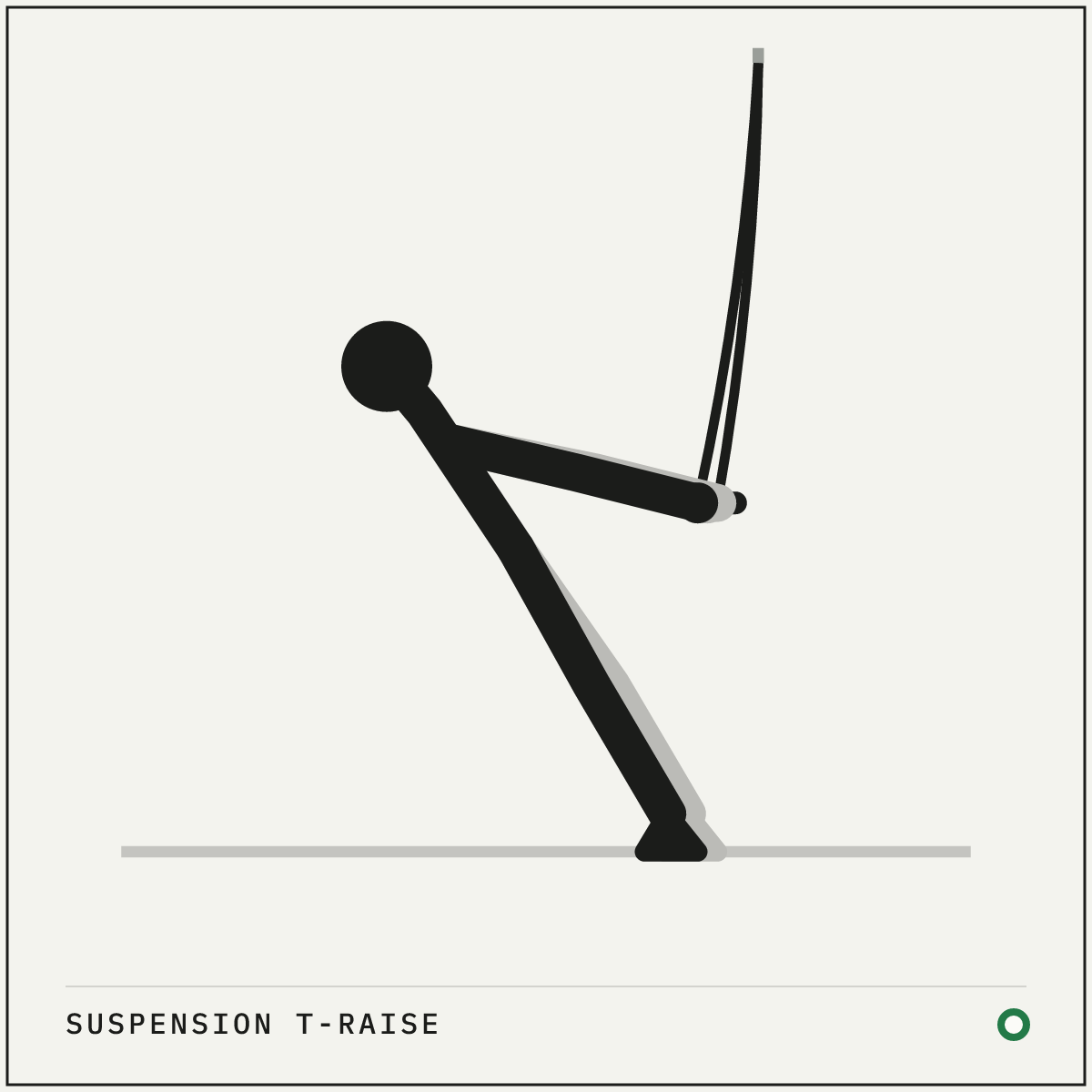
Lean back with straight arms and the straps under tension before the first rep.
02 Arms in a T
Sweep straight arms out to the sides until they form a T, squeezing your upper back.
How to do it
Setup
- Take a handle in each hand with the straps set high, palms facing each other.
- Walk your feet forward and lean back just past vertical with your arms straight.
- Start with only a small lean, because this movement is harder than a row.
Execution
- Keep your arms straight and sweep them out to the sides until they form a T.
- Squeeze your shoulder blades together at the top of the movement.
- Lower slowly until your arms are in front of you and the straps are tight.
BreathingExhale as you sweep your arms out, inhale on the return.
Cues and mistakes
Check every rep
- Keep your elbows completely straight so your upper back does the work.
- Lead the sweep with the back of your hands.
What goes wrong
- Bending your elbows, which turns it into a row and steals the work from the target muscles.
- Leaning back so far that you have to heave yourself up with momentum.
Safety
- The muscles in the upper back and rear shoulder are small. A shallow lean with perfect form does more for them than a steep lean you have to cheat.
General guidance, not medical advice. See how Setkit works.
Notes
The T-raise is a rear delt fly performed with your bodyweight. Where a row lets you bend your elbows and recruit your lats, keeping your arms straight forces your upper back and the rear of your shoulders to do all the moving.
This is a transverse-plane pull, which means it trains a different part of the back than a Y-raise. The Y-raise targets the lower trapezius by going overhead, while the T-raise targets the middle trapezius and rhomboids by sweeping out to the sides. Both muscles need work for the shoulder blade to sit and move well.
Because your arms stay straight, the lever is very long. That means you need much less lean than you use for a row. Start almost standing, and focus on squeezing your shoulder blades together rather than fighting a heavy load.