Incline dumbbell fly
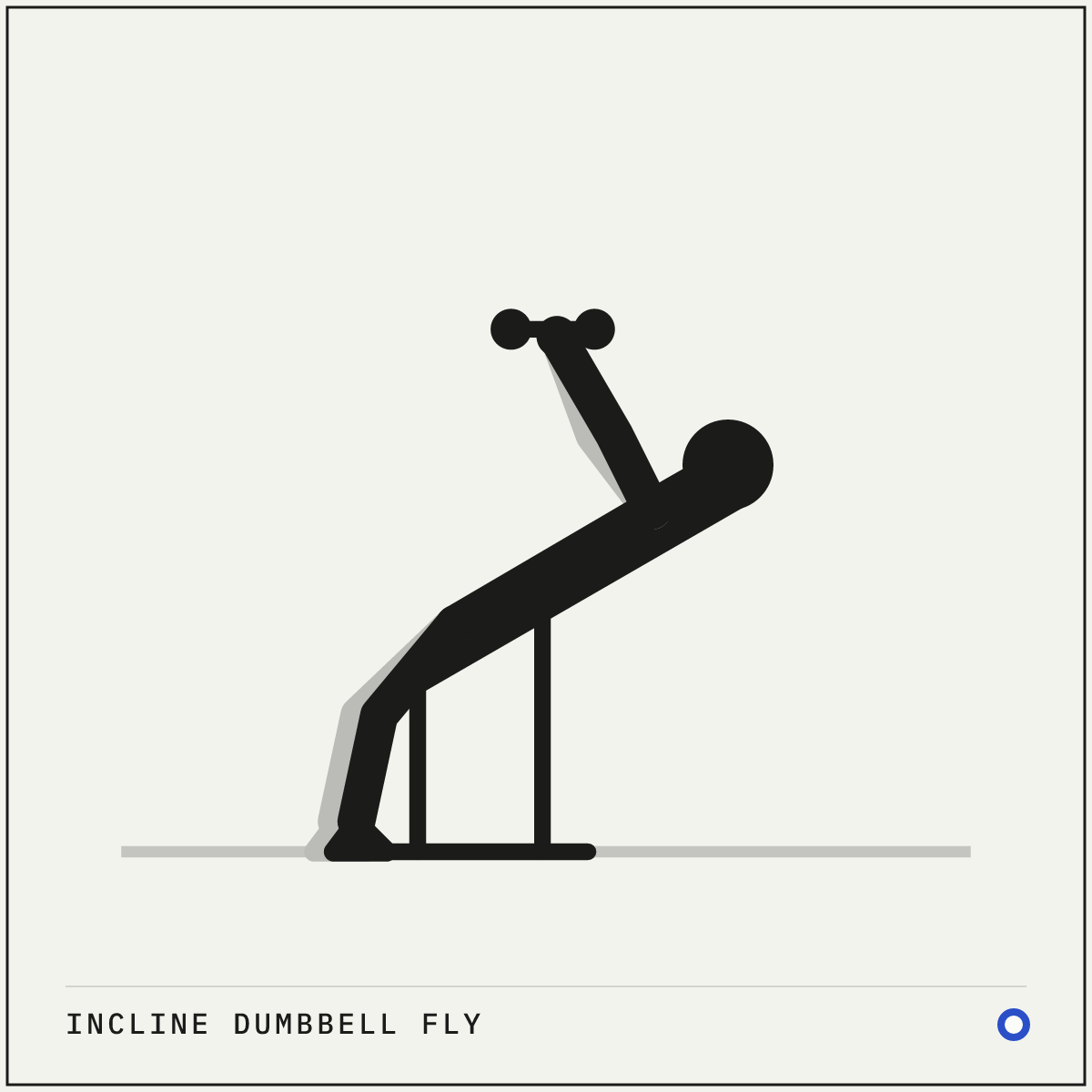
A fly on a tilted bench. The chest working on its own, at the angle that hits the upper fibers.
The movement
2 stages
Weights together
01 Weights together
Arms above the upper chest with a slight, fixed bend in the elbows.
02 Wide arc
Open the arms in a wide arc until the upper arms are level with the pad, elbow angle unchanged.
How to do it
Setup
- Set the bench to about 30° and lie back with a dumbbell above your upper chest in each hand, palms facing each other.
- Bend your elbows slightly and hold that angle for the whole set.
Execution
- Lower both arms out to the sides in a wide arc until your chest is stretched.
- Stop when your upper arms are roughly level with the pad.
- Bring the weights back together along the same arc without straightening your elbows.
BreathingInhale as your arms open, exhale as they come together.
Cues and mistakes
Check every rep
- Fix the elbow angle before the first rep and keep it there.
- Move your upper arms through the arc, and let your hands follow.
What goes wrong
- Opening and closing the elbows, which turns the fly into a sloppy press.
- Dropping your arms well below the pad chasing a stretch, which loads the front of the shoulder.
- Picking a weight that only moves if your elbows bend, which is the same as picking a press.
Safety
- The bottom of any fly is the most exposed position your shoulder gets into under load, and the incline makes it deeper. Keep the range short of pain and the weight light enough to stop the arc whenever you want.
General guidance, not medical advice. See how Setkit works.
Notes
A fly is the only chest movement here where the elbow does not straighten, which means the triceps cannot help and the chest has to finish every rep by itself. Doing it on an incline aims that isolated work at the fibers running down from the collarbone, the part of the chest that flat pressing reaches least.
The reason to do this when the incline press already trains those fibers is the shape of the resistance. In a press the hardest point is near the bottom, and the load falls away as you lock out. In a fly your chest is at its most stretched and its most loaded at the same moment, held out on a long lever, so a fairly light dumbbell creates a lot of tension exactly where it counts.
That leverage picks the weight for you. Your arms are nearly straight and the load sits far from your shoulder, so the working weight is much lighter than your pressing weight. Anyone flying with their press weight has stopped flying and started pressing with wide elbows.
Treat the range as something to control rather than maximize. Stopping with your upper arms about level with the pad gives you the whole useful stretch. Below that you trade chest tension for shoulder strain and gain nothing.