Suspension chest press
A push-up variation using suspension straps. Adds instability and trains the chest and shoulders.
NeedsSuspension trainer
The movement
2 stages
Arms straight
01 Arms straight
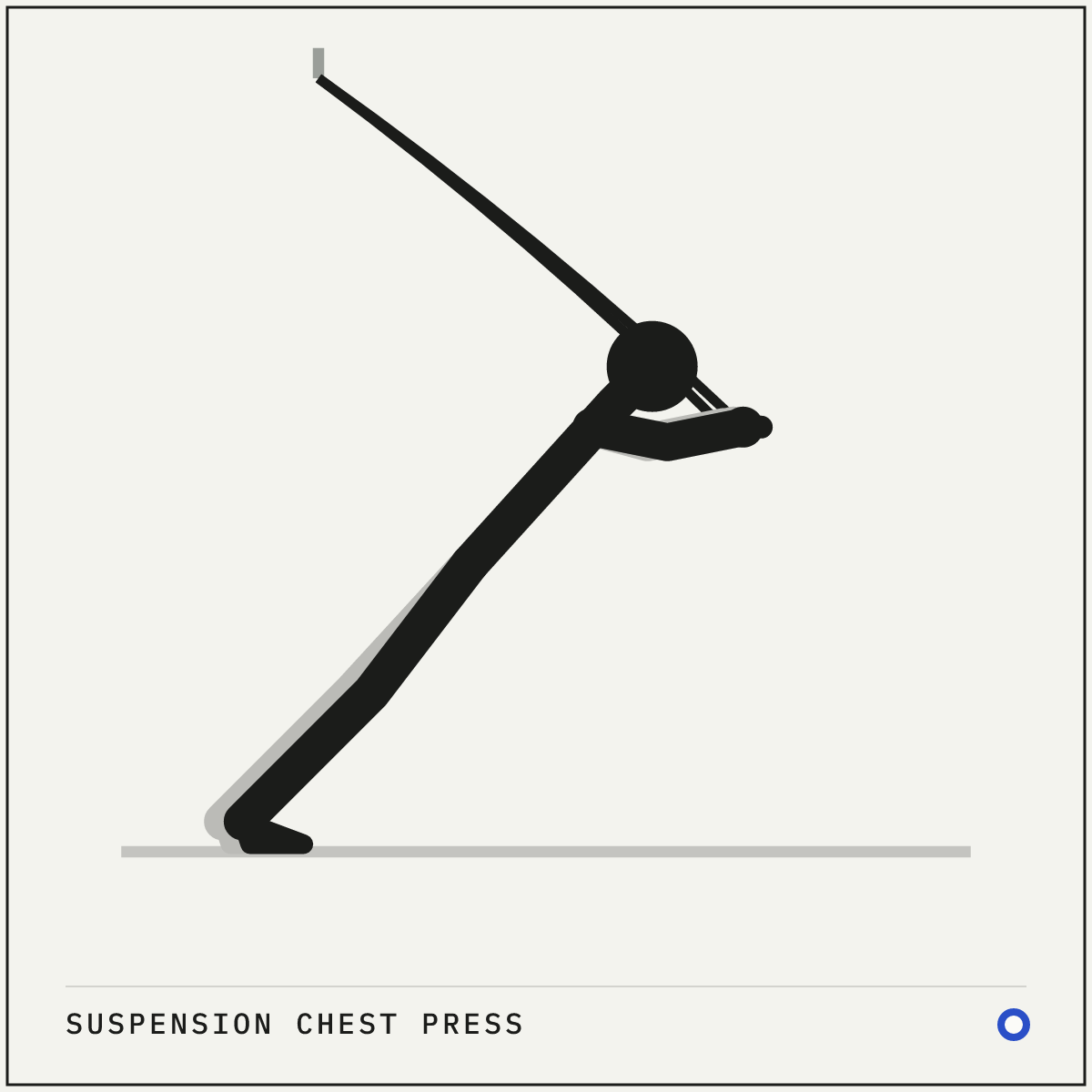
Lean forward into the handles with the arms straight and the body in one rigid line.
02 Chest to the handles
Bend the elbows back past the ribs and let the chest travel down between the handles.
How to do it
Setup
- Grab the handles and face away from the anchor point.
- Walk your feet back until your body forms a straight line leaning forward.
- Hold your arms straight out in front of your chest.
Execution
- Bend your elbows to lower your chest toward the handles.
- Stop when your thumbs are near your armpits.
- Press the handles away to return to straight arms.
BreathingInhale as you lower, exhale as you press.
Cues and mistakes
Check every rep
- Keep your body in a rigid plank from head to heel.
- Elbows track back at about 45°, never flared level with the shoulders.
- The straps should not scrape your arms as you press.
What goes wrong
- Letting your hips sag toward the floor.
- Pushing your hips back and breaking the straight body line.
- Flaring your elbows wide, which stresses the shoulder joints.
Safety
- If the rep gets too hard, simply walk your feet forward to decrease the angle and lighten the load.
General guidance, not medical advice. See how Setkit works.
Notes
The suspension chest press takes the standard push-up and adds instability. Because the handles can move in any direction, your chest and shoulders have to work harder just to keep your hands steady. This makes the movement challenging even for people who can easily perform dozens of floor push-ups.
The greatest advantage of the straps is how easily you can scale the difficulty. The closer your feet are to the anchor point, the more horizontal your body becomes, and the heavier the press feels. When you reach failure on a heavy angle, you can take one step forward and immediately continue the set with a lighter load.
Keep the straps slightly above your arms so they do not scrape your skin as you push. If your lower back sags or your hips shoot backward, your core has failed before your chest. Walk your feet forward to find an angle where you can hold a perfect plank.