Suspension mountain climber
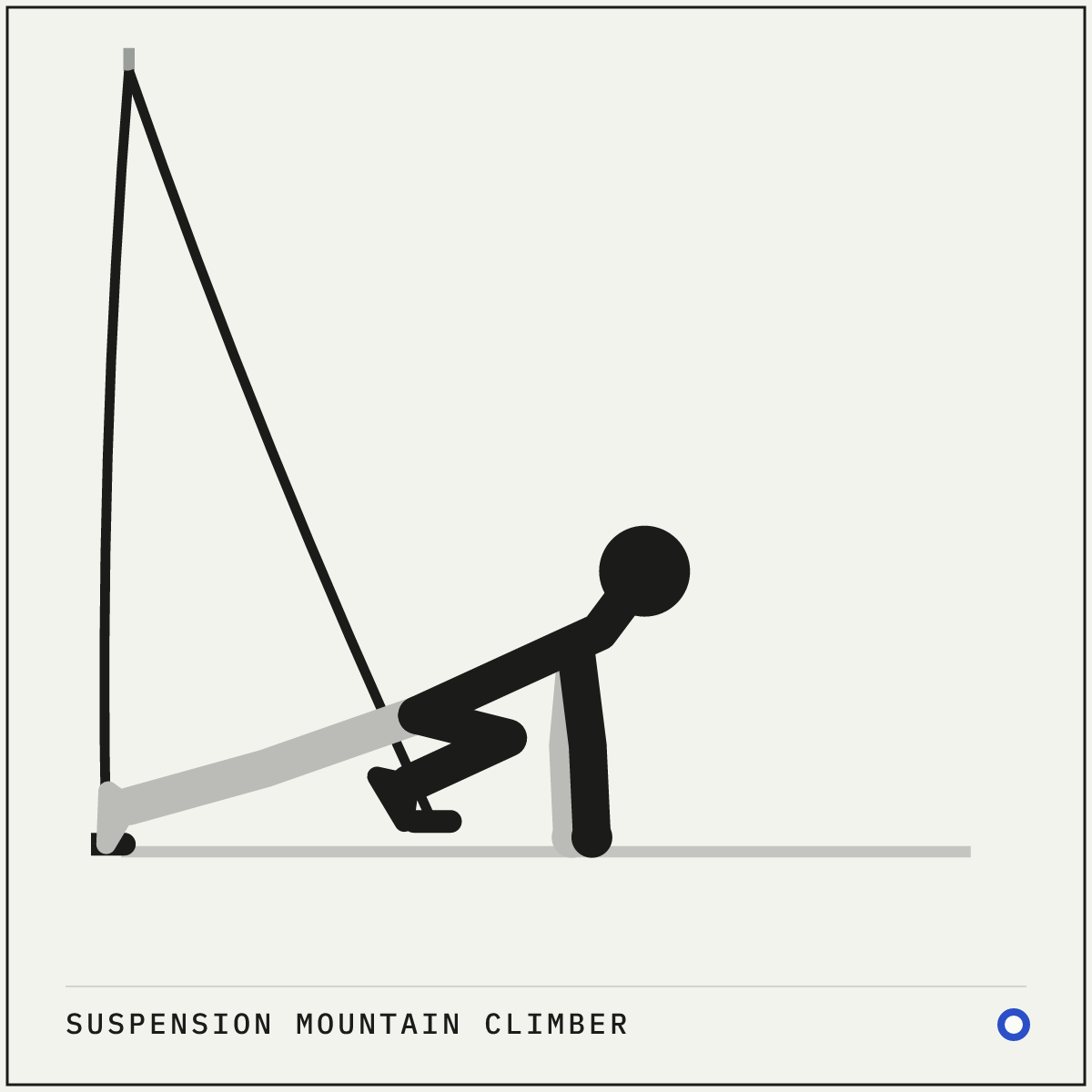
A mountain climber performed with your feet suspended in straps. While stationary, it simulates a running stride that torches the core and shoulders.
TrainsCore
NeedsSuspension trainer
The movement
2 stages
Drive left
01 Drive left
One knee drives under the chest; hips stay low.
02 Drive right
Switch legs like running; shoulders stay over hands.
How to do it
Setup
- Adjust the suspension straps so the handles are about a foot off the floor.
- Place your feet in the foot cradles and get into a high plank (push-up) position.
Execution
- Keep your arms straight and your core braced tight.
- Drive your right knee forward toward your chest, keeping your toes off the ground.
- Quickly extend your right leg back while simultaneously driving your left knee forward.
- Continue alternating legs at a steady, rhythmic pace.
BreathingTake short, rhythmic breaths in time with your leg drives.
Cues and mistakes
Check every rep
- Keep the hips level as each knee drives in.
- Keep your shoulders stacked directly over your wrists the entire time.
What goes wrong
- Letting the hips bounce wildly up and down with every stride.
- Sagging the lower back toward the floor, disengaging the core.
Safety
- Stop immediately if you feel pain or a pinching sensation in your lower back.
General guidance, not medical advice. See how Setkit works.
Notes
The suspension mountain climber is a fantastic hybrid exercise. Because your feet are suspended in the straps, you cannot rely on friction with the floor to help you balance. This forces the shoulders and chest to work overtime to stabilize your upper body while the core dynamically controls the legs.
While it is technically performed stationary, it mimics the reciprocal leg action of sprinting (locomotion) against resistance. It is often used as a brutal metabolic finisher at the end of a core or upper body workout.