Incline barbell bench press
The bench press on a tilted bench. The heaviest way to load the upper chest, with the barbell's usual risks.
The movement
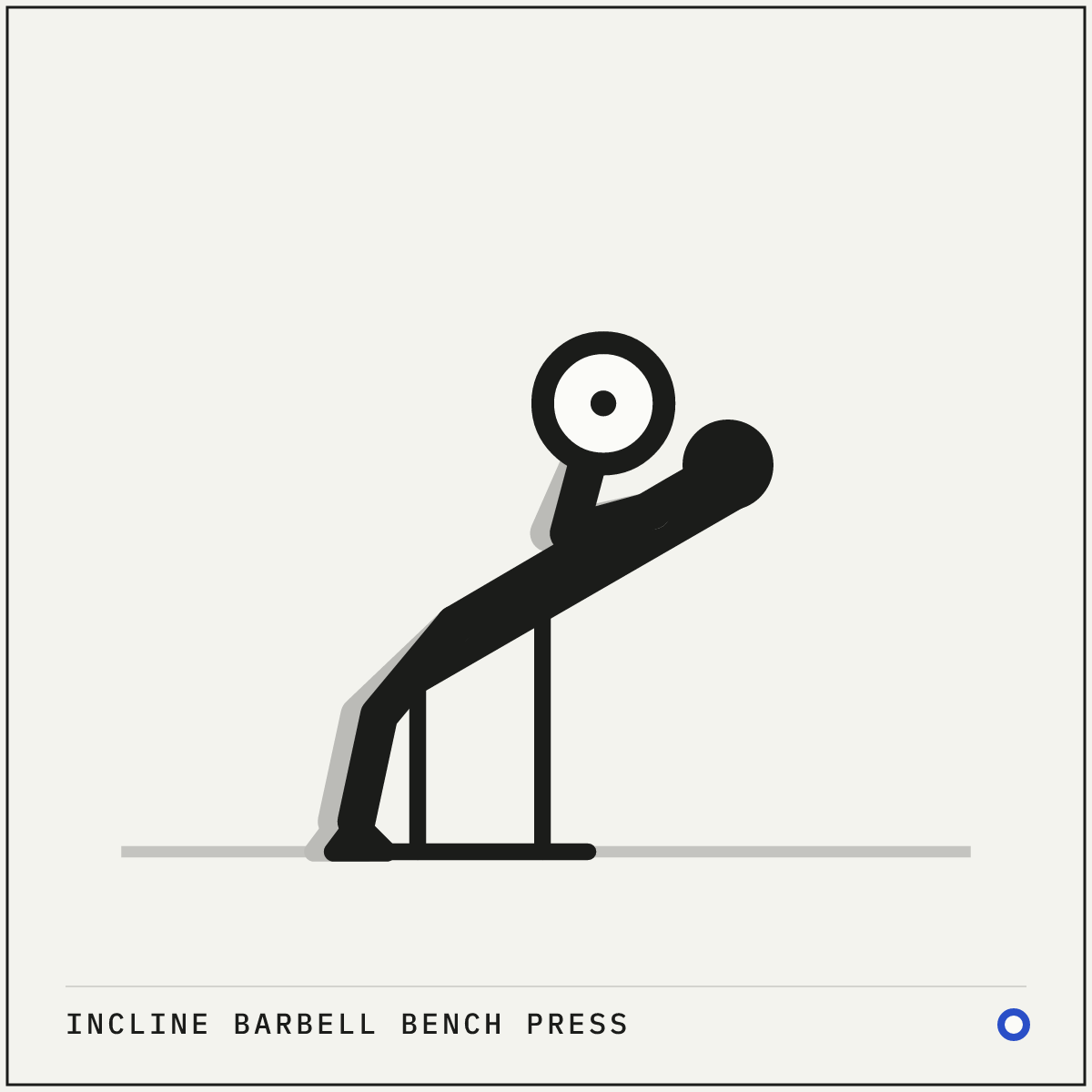
2 stages
Bar to the upper chest
01 Bar to the upper chest
Touch the bar high on the chest, just below the collarbones, with the forearms vertical.
02 Lockout
Press back up to straight arms over the shoulders without lifting the hips.
How to do it
Setup
- Set the bench to about 30° and lie back with your eyes under the bar.
- Squeeze your shoulder blades together and down into the pad.
- Grip a little wider than your shoulders, so your forearms will be vertical at your chest.
Execution
- Lift the bar off the rack and hold it over your shoulders with straight arms.
- Lower it under control to the top of your chest, just below your collarbones.
- Press back up and slightly toward the rack until your arms are straight.
BreathingTake a breath at the top, hold it as you lower, and exhale as you press.
Cues and mistakes
Check every rep
- Touch the bar high on your chest, not down at the breastbone.
- Elbows about 45° from your torso, never level with your shoulders.
What goes wrong
- Lowering the bar to the same spot as on a flat press, which forces the shoulders into a deep stretch.
- Lifting the hips off the bench to finish a rep, which quietly flattens the angle.
- Setting the bench close to vertical, which makes it a seated shoulder press.
Safety
- A missed incline press slides down toward your throat rather than your chest. Use safety pins or a spotter every time you go heavy.
General guidance, not medical advice. See how Setkit works.
Notes
Everything that makes the flat bench press worth doing applies here. Two hands on one bar, a braced body, and weight that can climb in small steps for years. What changes is where the work lands. With your torso tilted back, your arm presses up and away from you rather than straight out, and the part of the chest running down from the collarbone takes a much larger share.
The bar travels a different path too, and this is where most incline pressing goes wrong. Lowering to the breastbone is right on a flat bench and wrong here, because the tilt turns it into a deep and unhelpful shoulder stretch. Touch high, around the top of the chest or the collarbones, and press in a near-vertical line from there.
Expect to press less. Most people press noticeably less on an incline than flat, and the gap is bigger if you have long arms. Chasing your flat-bench number is how the hips come off the bench, and arching until the bench is effectively flat again means you have just done a worse flat press.
The dumbbell version is the better default for building muscle. It gives a deeper range, lets your hands find their own path, and is far easier to bail out of. Pick the bar when you want a measurable pressing number at this angle, and keep pins under it.